
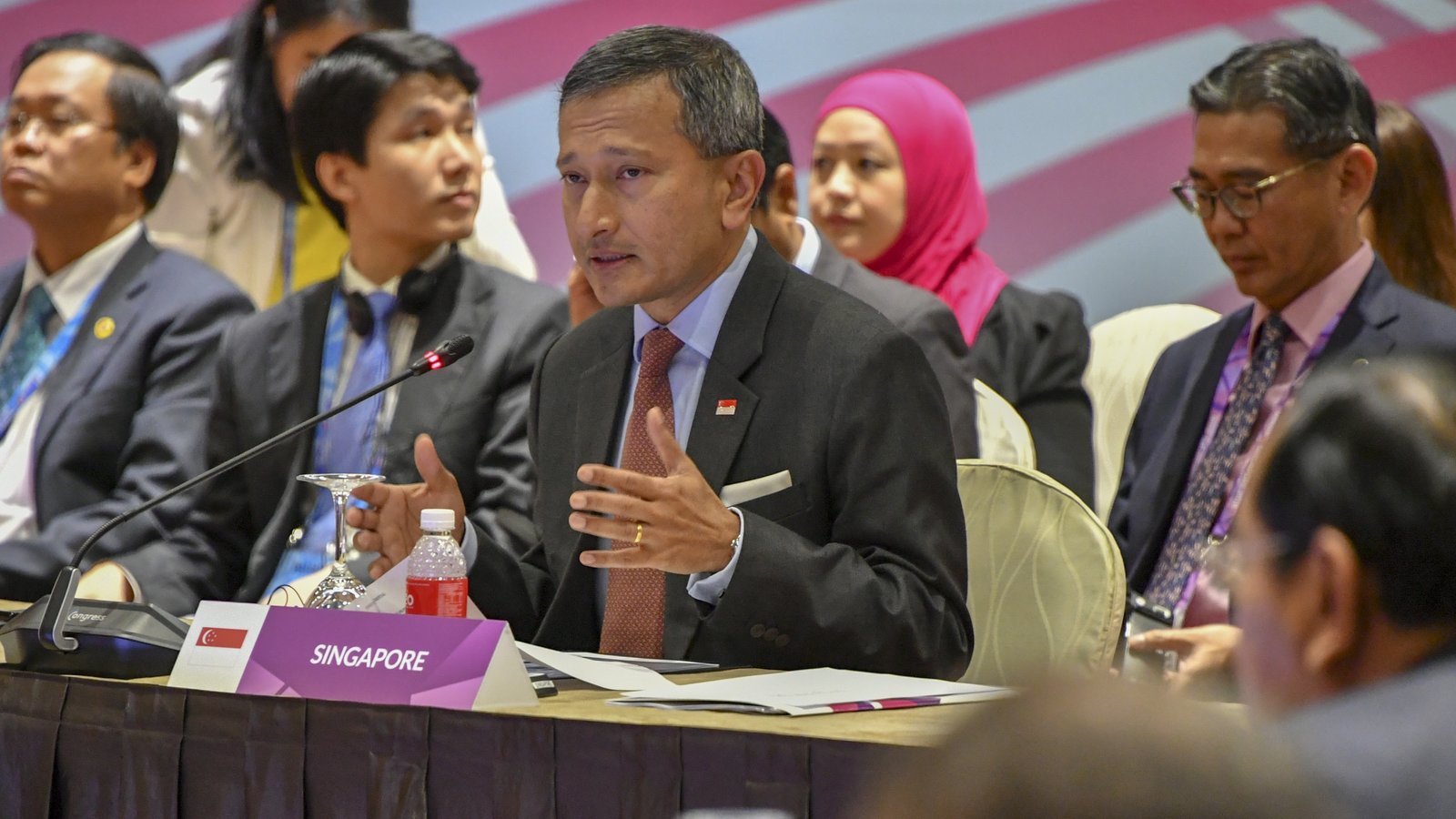
Executive capability snapshot
Singapore presents a compact whole-of-government model in which foreign policy is supported by a mature digital state, explicit international cyber engagement, a developing AI-governance architecture, sustained capacity building and a relatively small but globally connected diplomatic network. The Ministry of Foreign Affairs does not publish a single standalone digital-diplomacy strategy. Its capability is visible instead through institutional structure, recurring policy priorities, specialised national partners, professional development, consular tools and repeated international practice.
The ministry's organisation page states that MFA is divided into eleven directorates covering political and economic matters and seven directorates covering functions including protocol, consular issues and the Singapore Cooperation Programme. Corporate Affairs, Human Resources and the Diplomatic Academy support organisational management and personnel development. The MFA organisation page describes one third of its staff serving in 50 overseas missions. In a later written parliamentary reply dated 10 September 2026, the Foreign Minister described the diplomatic footprint as more than 50 overseas missions. The two figures are presented with their respective source dates rather than treated as a single timeless count. This compact structure places a premium on coordination, training and the ability to connect headquarters with a network operating across different regions and risk environments.
Singapore's external digital agenda is particularly visible in cyber diplomacy. Its leadership of the United Nations Open-Ended Working Group on information and communications technologies contributed to agreement on a permanent Global Mechanism on developments in the field of ICTs in the context of international security. Singapore also combines cyber norms, practical capacity building and regional cooperation. In AI, national strategy, governance frameworks and the creation of a National AI Council provide a strong enabling environment, while MFA statements increasingly treat AI as a diplomatic and global-governance concern.
Consular readiness is supported by eRegister, overseas mission information and crisis-response arrangements. Development partnerships, the Singapore Cooperation Programme and initiatives for small states extend capability beyond bilateral representation by building durable professional networks around public administration, digital transformation and emerging technology.
The principal evidence gap concerns the internal operating layer. Public sources do not establish a ministry-specific AI approval model, rules for sensitive diplomatic data, traceability standards for AI-assisted analysis, common mission-level digital maturity, vendor exit arrangements or a complete after-action learning process. DD therefore assesses Singapore as institutionally established in ownership, strategy, cyber diplomacy and coordination, with developing evidence on internal AI governance, network-wide operating standards and retained authority.
Institutional signal map
| Dimension | Publicly visible signal | Evidence note |
|---|---|---|
| Institutional ownership | Established | MFA has explicit responsibility for foreign policy, consular response, development partnerships and personnel capability, while AI, digital government and cybersecurity depend on specialised whole-of-government institutions. |
| Strategy and doctrine | Established | Current MFA priorities connect AI, cyber norms, digital-economic cooperation, development partnerships and digitally supported consular response to foreign-policy delivery. |
| AI governance in foreign affairs | Developing | Singapore has a mature national AI-governance environment and an increasingly visible external AI agenda; ministry-specific operational rules are not fully public. |
| Public diplomacy capability | Developing | Public communication, domestic explanation of foreign policy and capacity-building networks are visible; systematic conversion of audience and mission feedback into policy learning is less documented. |
| Cyber and technology diplomacy | Established | Singapore has sustained international cyber leadership, digital-economy diplomacy, regional cooperation and capacity-building activity. |
| Mission-network capability | Developing | The MFA's overseas network, diplomatic training and eRegister are visible. The organisation page describes 50 missions, while a later ministerial reply dated 10 September 2026 describes more than 50. Public evidence on common digital operating standards and recovery across every post remains incomplete. |
| Coordination and readiness | Established | Compact institutional design, whole-of-government interfaces, professional development and digital emergency tools provide strong readiness signals. |
| Sovereignty, continuity and human authority | Developing | National trust and governance safeguards are visible; MFA-specific AI traceability, exit capacity, operational continuity and human-review controls are only partly public. |
The labels describe baseline public evidence available through 25 July 2026 for the scope stated in each row; the Mission-network capability note also incorporates a targeted MFA ministerial reply dated 10 September 2026. National policy is distinguished from foreign-ministry practice; announced programmes are distinguished from deployed services. A limited public record does not establish absence of capability. This targeted source does not imply a full September re-review of every dimension.
Institutional ownership
Singapore's model is compact in size but distributed in ownership. MFA owns diplomatic outcomes: bilateral and multilateral relations, consular protection, development partnerships, public communication and the work of overseas missions. Its current organisational structure combines geographic and functional directorates with support functions that are directly relevant to capability, including the Diplomatic Academy, Human Resources, Corporate Affairs, Consular Directorate and the Singapore Cooperation Programme.
The ministry's fifty-odd overseas missions (a later ministerial reply of 10 September 2026 says more than 50) form the operational network. One third of MFA personnel serve abroad, while non-resident ambassadors, high commissioners and honorary consuls extend representation beyond resident posts. This makes personnel development and headquarters–mission coordination central design questions rather than administrative details.
Technical and regulatory ownership is broader. National AI policy, digital-government architecture and governance frameworks sit primarily within Singapore's Smart Nation and digital-policy institutions. Cybersecurity expertise and national resilience involve the Cyber Security Agency. Digital regulation and AI assurance involve the Infocomm Media Development Authority and other public bodies. MFA's role is to translate these national capabilities into foreign-policy positions, international partnerships, multilateral negotiations and practical cooperation.
This division of labour is a strength because it gives diplomacy access to specialised technical capacity. It also creates a continuing coordination requirement. Public evidence shows repeated cooperation across government, but does not publish a complete operating map for how technical assessment, diplomatic judgment, legal advice, crisis escalation and mission reporting are combined in time-sensitive cases.
The appropriate description is therefore MFA-owned diplomatic capability within a whole-of-government digital architecture. Singapore's national reputation for digital government should not be treated as automatic proof that every diplomatic workflow is digitally mature. The institutional signal comes from the interfaces among MFA, national technical bodies, training structures, consular tools and international practice.
Strategy and doctrine
Singapore does not appear to rely on one document labelled a digital-diplomacy strategy. Its doctrine is visible across connected policy layers.
The Ministry of Foreign Affairs Addendum to the President's Address published in 2025 places artificial intelligence, cyber norms, digital-economic cooperation, development partnerships and consular capability within the ministry's forward agenda. It treats AI and cyber issues as part of the global commons and links Singapore's external relevance to the ability to contribute ideas, rules, partnerships and practical solutions.
At national level, Smart Nation 2.0 and the National AI Strategy provide an enabling policy environment. The updated AI strategy published in 2026, together with the National AI Council established that year, signals an effort to coordinate national priorities, capabilities and safeguards as AI systems become more widely deployed. These are national strategies rather than MFA operating manuals. Their diplomatic significance lies in the policy positions, expertise and credibility they make available for bilateral and multilateral engagement.
Cyber doctrine is similarly layered. Singapore's national cybersecurity strategy includes international cooperation, norms and capacity building. MFA contributes the diplomatic dimension, while the Cyber Security Agency supplies specialist policy and technical capability. Singapore's leadership in United Nations cyber negotiations demonstrates that this relationship can support sustained agenda setting rather than isolated participation.
Development cooperation provides a further strategic layer. The Singapore Cooperation Programme and small-state initiatives use training, peer exchange and practical public-sector knowledge to build relationships. Digital transformation, cybersecurity and AI increasingly form part of this cooperation. This connects foreign policy to capability building in a form suited to a small state: influence is generated through reliability, useful expertise and durable institutional networks.
The public record establishes direction and repeated practice. It is less detailed on a shared ministry-wide capability baseline, performance measures across missions, thresholds for escalating digital incidents and the process by which operational lessons are converted into revised doctrine.
AI governance in foreign affairs
Singapore has one of the most visible public AI-governance environments among small states. The National AI Strategy 2.0, the 2026 strategy update, the National AI Council, AI Verify and governance frameworks for generative and agentic AI show sustained attention to innovation, assurance, public value and risk. The National AI Council is a national enabling institution; it does not document MFA's internal AI approval process.
These national arrangements matter to foreign affairs in three ways. First, they give Singapore an evidence base from which to participate in global AI-governance debates. Second, they create practical frameworks that can be shared through partnerships and capacity-building programmes. Third, they allow diplomats to connect questions of AI safety, economic development, standards, trust and international cooperation.
MFA statements increasingly place AI within the international agenda. Singapore advocates guardrails that preserve innovation while reducing harm, and it presents AI as a field where small states need meaningful participation. This external role is consistent with Singapore's broader approach to multilateral rule shaping.
The public evidence is much less complete on AI use inside MFA. It does not establish whether the ministry has:
- an internal AI approval or review body;
- a public inventory of diplomatic AI use cases;
- specific rules for confidential or sensitive diplomatic information;
- traceability requirements for AI-assisted briefs and translations;
- model-evaluation standards tailored to foreign-policy work;
- defined human-review thresholds for recommendations or crisis analysis;
- a ministry-specific procurement, portability or exit model.
The correct assessment is Developing. Singapore's national AI capability and external diplomacy are substantial. A responsible institutional profile must still distinguish them from publicly evidenced governance of AI inside diplomatic workflows.
Public diplomacy capability
Singapore's public-diplomacy capability is shaped by the requirements of a small state: explaining foreign-policy choices domestically, sustaining international trust, creating professional networks and demonstrating practical relevance. The model is less dependent on a large cultural apparatus than some European systems and more closely connected to policy communication, convening, education and capacity building.
MFA regularly explains the strategic environment and Singapore's foreign-policy constraints to domestic audiences. This is an important capability because public understanding affects the political space available for international action. The ministry's communication functions and overseas missions also provide official information and country-specific engagement.
The Singapore Cooperation Programme is a major relationship infrastructure. It brings foreign officials into sustained contact with Singaporean institutions and expertise. The Forum of Small States and related initiatives create channels through which small countries can exchange experience and develop a collective voice. FOSS for Good extends this logic into digital policy and technology capacity.
These activities meet a deeper test of public diplomacy: they create repeated institutional relationships rather than relying only on visibility. Training, study visits and professional exchange can generate trust, shared language and access that persist after a single campaign or event.
The evidence gap concerns listening and conversion. Public sources do not provide a complete account of how missions collect audience insight, how local context is compared across posts, how feedback reaches policy owners or how public engagement changes institutional decisions. The visible relationship architecture is meaningful, but the internal learning chain remains only partly documented.
Cyber and technology diplomacy
Cyber diplomacy is Singapore's strongest publicly evidenced digital-diplomacy capability. The country has combined national strategy, specialised technical institutions, regional cooperation, capacity building and multilateral negotiation.
Singapore's leadership of the United Nations Open-Ended Working Group on ICTs in international security was especially significant. The process addressed responsible state behaviour, international law, confidence-building, capacity building and regular institutional dialogue. Agreement on a permanent Global Mechanism created a continuing venue for this work. The achievement demonstrates diplomatic convening, procedural leadership and the ability to connect technical security questions with the interests of a broad UN membership.
Capacity building is central to Singapore's approach. Cybersecurity programmes for ASEAN and other partners recognise that norms have limited value when states lack the institutions and skills needed to implement them. Singapore therefore links diplomatic rule shaping with training and practical cooperation.
Technology diplomacy extends beyond cyber. Digital-economy agreements and cooperation roadmaps address trusted data flows, digital trade, emerging technologies and regulatory compatibility. AI governance has become a further field of international engagement. These activities connect security, economic policy, standards and public-sector innovation.
The model depends on clear interfaces. CSA is not the same institution as MFA, and national AI bodies do not become diplomatic owners merely because their work has international relevance. Singapore's strength lies in converting specialist capacity into coherent external engagement. The public limitation is that the detailed decision and escalation chain across institutions is not fully visible.
Mission-network capability
Singapore's mission network is small relative to those of major powers but extensive relative to the size of the state. Some fifty overseas missions (a later ministerial reply of 10 September 2026 says more than 50), non-resident appointments and honorary consuls support bilateral relations, multilateral work, consular assistance and economic engagement.
A compact network creates both advantages and constraints. Headquarters can maintain relatively close links with posts, and personnel may move through a shared professional system. At the same time, limited staffing means that individuals often carry broad portfolios and must respond to fast-moving events with limited specialist capacity on site.
The Diplomatic Academy supports pre-posting and continuing professional development. Its remit includes diplomatic tradecraft, policy knowledge, consular capability, communication and broader public-service learning. Training is therefore connected to the deployment cycle rather than treated solely as optional specialist education.
Digital consular tools provide another network signal. eRegister allows Singaporeans overseas to record travel or residence information so MFA can contact them during emergencies. Mission information, travel advisories and crisis-response teams provide additional channels. These tools do not replace human consular judgment; they support the identification, communication and coordination tasks surrounding it.
Public evidence does not establish a common digital maturity model across all missions, uniform analytical tools, shared standards for AI use, or a complete process for preserving knowledge across rotations. The network signal is therefore Developing: the organisational, training and service foundations are visible, while operational consistency across posts is not fully documented.
Capability in practice
UN cyber diplomacy and the Global Mechanism
What happened? Singapore chaired the United Nations Open-Ended Working Group on security of and in the use of ICTs and helped guide agreement on a permanent Global Mechanism for continuing international discussion and capacity building.
Capability visible: Multilateral leadership, coalition building, procedural credibility, translation of technical security questions into diplomatic language and sustained engagement with states at different capability levels.
What remains unknown? Public sources do not disclose the full internal coordination process among MFA, CSA, legal advisers, missions and political leadership.
Transferable lesson: Cyber diplomacy requires both specialist expertise and diplomatic process capability. Durable outcomes depend on institutions that can connect the two.
National AI Strategy 2.0 and the 2026 update
What happened? Singapore developed a national AI strategy, updated priorities in 2026 and created a National AI Council to strengthen coordination.
Capability visible: A national enabling environment for AI policy, governance, skills, public-value applications and international engagement.
What remains unknown? The national strategy does not establish how MFA approves or governs AI use with diplomatic data and decisions.
Transferable lesson: National AI leadership gives foreign ministries expertise and credibility, but internal diplomatic use still requires ministry-specific authority, assurance and traceability.
FOSS for Good and digital capacity building for small states
What happened? Singapore used small-state networks and the Singapore Cooperation Programme to support digital-policy, AI and governance capacity among partner countries.
Capability visible: Relationship building through practical expertise, peer learning and sustained institutional networks.
What remains unknown? Public information does not show a common evaluation framework for the long-term diplomatic or institutional effects of every programme.
Transferable lesson: Capacity building can function as strategic relationship infrastructure when it responds to partner needs and creates durable professional connections.
eRegister and digital consular coordination
What happened? MFA operates eRegister so Singaporeans abroad can provide information that assists communication and emergency coordination.
In a written reply on 10 September 2026, the Foreign Minister described MFA outreach to affected Singaporeans in Nepal and Tibet, the use of non-resident representatives and partners, and deployable Crisis Response Teams in major incidents. This is a dated example of consular response, not evidence that every mission uses the same recovery workflow.
Capability visible: Digital support for locating, informing and assisting citizens, linked to overseas missions and crisis-response arrangements.
What remains unknown? Public sources do not provide the complete operational workflow, resilience architecture, data-retention model or after-action process.
Transferable lesson: A consular tool becomes capability when it is connected to verified roles, human escalation, secure data practice and continuity arrangements.
Diplomatic Academy and pre-posting capability development
What happened? MFA maintains a Diplomatic Academy and structured personnel-development functions supporting officers at headquarters and abroad.
Capability visible: Institutionalised preparation, common professional language and the ability to connect learning to postings and career progression.
What remains unknown? Public sources do not show how digital capability is measured across career stages or how mission lessons systematically update curricula.
Transferable lesson: Small diplomatic services can use shared training and rotation systems to scale capability without creating a specialist unit for every issue.
Readiness signals
Prepare
Established
Singapore has visible institutional ownership, specialist national partners, professional development, strategic priorities and established international engagement. The public record supports a strong preparation signal at both diplomatic and whole-of-government levels.
Sense
Developing
MFA, overseas missions and national technical institutions clearly monitor geopolitical, cyber, technological and consular environments. Public material is less detailed on common analytical methods, cross-mission comparison and the traceability of AI-assisted sense-making.
Align
Established
Compact government structures, recurring inter-agency cooperation and Singapore's multilateral performance indicate strong alignment capacity. The exact operating interfaces for sensitive or fast-moving digital incidents remain non-public.
Respond
Established
Singapore demonstrates the ability to coordinate consular assistance, lead multilateral negotiations, create partnerships and mobilise capacity-building programmes. These are repeated institutional practices rather than one-off signals.
Recover
Partially evidenced
Crisis-response and continuity arrangements are visible, but public sources provide limited evidence on post-incident review, retained institutional memory, cross-mission learning and recovery from dependence on particular platforms or vendors.
Adapt
Developing
Singapore updates national AI and cybersecurity policy, expands training and develops new international mechanisms. Public evidence does not establish how consistently operational lessons are converted into revised MFA-wide standards.
DD assessment
Institutional strengths
- Compact whole-of-government coordination with clear diplomatic and technical centres of competence.
- Explicit and sustained international cyber leadership.
- A strong national AI-governance environment supporting external engagement.
- Small-state and development-partnership networks that convert expertise into durable relationships.
- Professional development connected to headquarters and overseas service.
- Visible digital support for consular emergency response.
Structural tensions
- National digital strength can obscure the difference between state-wide capability and ministry-specific operating controls.
- Cross-government delivery requires clear interfaces among diplomatic, technical, legal and security actors.
- A compact service still has to maintain consistency across missions with different staffing and risk environments.
- External agenda setting on AI should be matched by transparent internal governance for diplomatic use.
- Digital tools can improve reach and speed while increasing dependence on data quality, infrastructure and vendors.
Public evidence limitations
Public sources do not provide a complete account of:
- internal MFA AI use cases;
- AI approval, assurance and human-review thresholds;
- rules for sensitive diplomatic data;
- traceability of AI-assisted briefings and analysis;
- common mission-level digital maturity;
- escalation thresholds for digital and narrative incidents;
- post-incident review and institutional memory;
- vendor dependence, portability and exit capacity.
Transferable lessons
- Connect foreign policy to the wider digital-state architecture without confusing national and ministerial responsibility.
- Give cyber and emerging-technology diplomacy explicit diplomatic ownership.
- Use capacity building to create durable small-state relationships and practical international relevance.
- Connect digital consular tools to human authority, crisis roles and continuity planning.
- Match external AI leadership with transparent governance of AI inside the foreign ministry.
Methodology and limitations
This profile is based on publicly available material and assesses visible institutional arrangements and signals. It does not claim access to confidential systems, classified processes or non-public operational practice. National digital-government strength is treated as an enabling condition rather than automatic evidence of foreign-ministry capability. Limited public evidence does not indicate absence of capability.
A strategy or official announcement establishes an institution's stated position; implementation and results require separate evidence. DD interpretations are identified as analysis. Substantive updates are dated and summarised in the version history.
How to cite
Recommended citation
Iancu, Laura. “Singapore Digital Diplomacy Capability Profile.” Diplomats.Digital, Digital Diplomacy Capability Profile 04, version 1.2, 2026.
APA
Iancu, L. (2026). Singapore digital diplomacy capability profile (Version 1.2). Diplomats.Digital.
Chicago
Laura Iancu, “Singapore Digital Diplomacy Capability Profile,” Digital Diplomacy Capability Profile 04, version 1.2 (Diplomats.Digital, 2026).
BibTeX
@misc{iancu2026singapore_digital_diplomacy,
  author       = {Laura Iancu},
  title        = {Singapore Digital Diplomacy Capability Profile},
  year         = {2026},
  publisher    = {Diplomats.Digital},
  howpublished = {Digital Diplomacy Capability Profile 04},
  note         = {Version 1.2},
  url          = {https://diplomats.digital/country-profiles/singapore-digital-diplomacy}
}
Related DD knowledge
Official and institutional sources
- Organisation chart — Ministry of Foreign Affairs Singapore
- Diplomatic Academy — Ministry of Foreign Affairs Singapore
- Ministry of Foreign Affairs Addendum to the President's Address
- Speeches by MFA Political Office Holders during the Committee of Supply Debate, 27 February 2026
- Find an overseas mission — Ministry of Foreign Affairs Singapore
- eRegister — Ministry of Foreign Affairs Singapore
- eRegister frequently asked questions — Ministry of Foreign Affairs Singapore
- Forum of Small States — Ministry of Foreign Affairs Singapore
- Singapore Cooperation Programme
- Singapore's National AI Strategy
- Smart Nation 2.0
- Smart Nation frameworks and blueprints
- Artificial intelligence — Infocomm Media Development Authority
- Model AI Governance Framework for Agentic AI — Infocomm Media Development Authority
- AI Verify Foundation and AI assurance resources
- Singapore Cybersecurity Strategy 2021 — Cyber Security Agency of Singapore
- Singapore updates its national cybersecurity strategy — Cyber Security Agency of Singapore
- Singapore International Cyber Week
- Cybersecurity — Ministry of Foreign Affairs Singapore
- United Nations Office for Disarmament Affairs — Open-Ended Working Group on ICTs
- Digital Economy Agreements — Ministry of Trade and Industry Singapore
- Singapore–United States Partnership for Growth and Innovation
- Foreign Service Administration Specialist — Ministry of Foreign Affairs Singapore
- Singapore's national statement at the 79th Session of the United Nations General Assembly
- Minister for Foreign Affairs Dr Vivian Balakrishnan's written reply to Parliamentary Question No 2069, 10 September 2026
Corrections and additional evidence
Submit a factual correction or additional official source through the Diplomats.Digital contact page.