
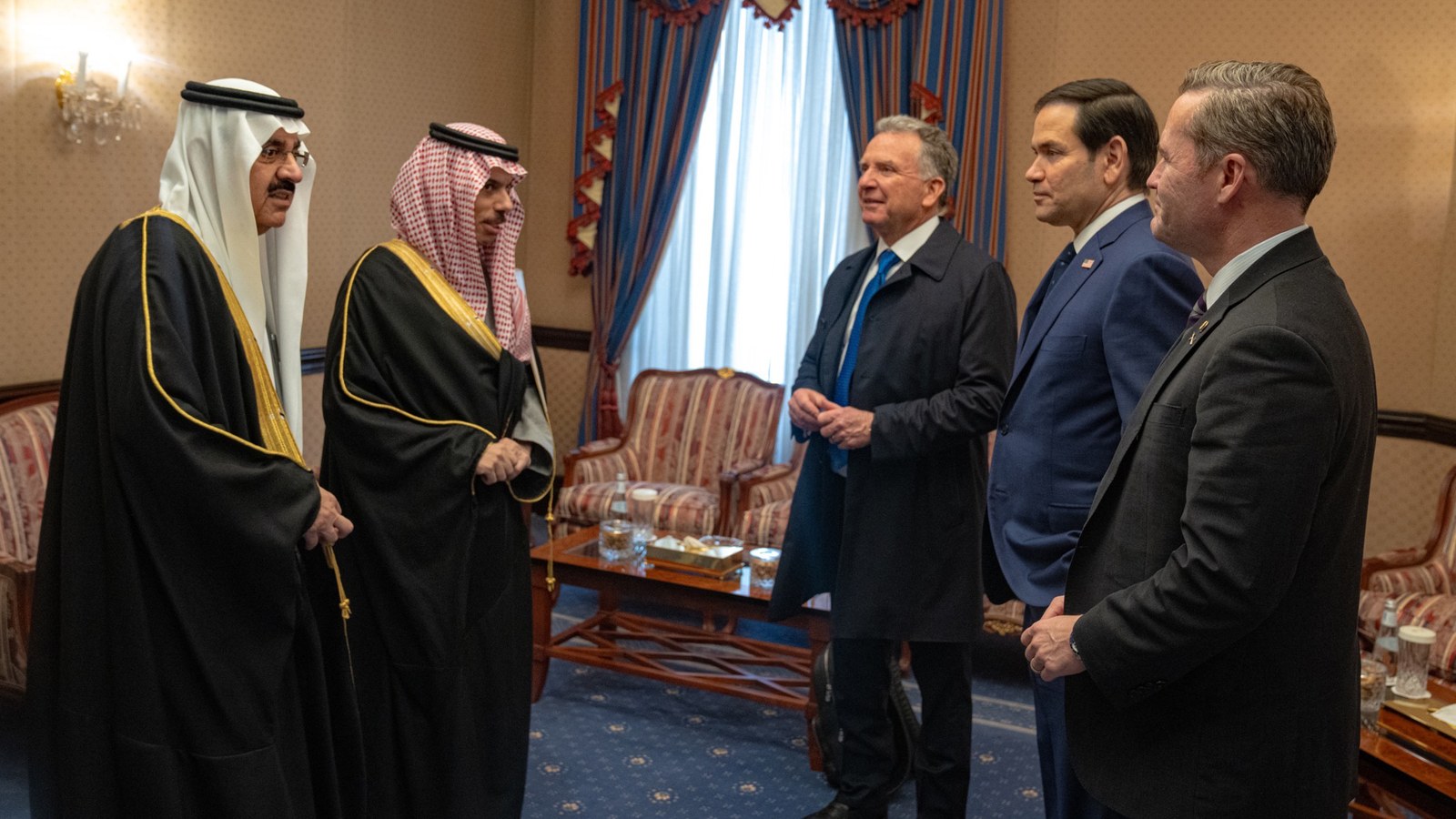
Executive capability snapshot
Saudi Arabia presents a whole-of-government digital-service and data-governance model in which the Ministry of Foreign Affairs has a substantial direct digital layer while operating inside a dense national framework for digital government, cybersecurity, data and artificial intelligence. The ministry’s own public evidence includes electronic diplomatic and consular services, the KSA VISA platform, data-governance and privacy arrangements, a digital-services policy, electronic-participation mechanisms, specialised IT as part of the ministry mission and cybersecurity-awareness activity. This creates a stronger basis for assessing ministry-level capability than national digital-government rankings alone.
The most visible operational layer is service delivery. The ministry maintains a broad eServices catalogue for citizens, visitors, Saudi missions abroad and foreign diplomatic missions accredited in the Kingdom. Services cover visas, passports, assistance for Saudis abroad, protocol, diplomatic-mission administration and document processes. The Unified National Visa Platform, KSA VISA, is particularly significant because it links more than 30 ministries, authorities and private-sector actors and was launched under the supervision of the foreign ministry. Saudi Press Agency reported that the platform incorporates artificial intelligence and emerging technologies to support data verification and service efficiency.
The ministry also publishes governance rules that directly apply to its digital activity. Its 2026 Policy on access to information and digital services describes security, privacy, interoperability, data minimisation, multi-factor authentication, periodic security checks, employee training, record keeping and annual policy review. Its Privacy Policy identifies a Data Management Office and a Supreme Executive Committee for Data Governance and Management and explicitly defines “the Ministry” as including its branches and Saudi diplomatic missions abroad. This is meaningful evidence of ministry-level data governance across the network, although privacy and data governance should not be treated as equivalent to complete AI assurance.
The national environment adds another layer. The Digital Government Authority publishes government-wide policies and business-continuity controls; the National Cybersecurity Authority maintains essential, data and critical-systems cybersecurity controls; and the Saudi Data & AI Authority leads the National Strategy for Data and AI. In March 2026, the Council of Ministers designated 2026 the Year of Artificial Intelligence. These frameworks are relevant because MOFA operates within them, but DD treats them as enabling and regulatory context rather than direct proof of how every control is implemented inside diplomatic workflows.
AI is also visible in foreign-policy activity. The foreign minister led Saudi Arabia’s delegation at the 2025 AI Action Summit in Paris alongside the president of SDAIA, and Saudi representatives participate in international AI-governance processes. These are signals of emerging AI statecraft and cross-government technology diplomacy. Public sources are less specific about internal AI-assisted diplomatic analysis, briefing, translation or decision support inside MOFA.
Saudi Arabia’s model therefore combines direct digital service ownership with national governance and increasingly explicit technology statecraft. The principal evidence gaps concern retained authority and operational maturity: public sources do not establish ministry-wide AI use cases, human-review thresholds, AI-output traceability, model assurance, mission-level digital maturity, vendor dependence, portability or the extent to which published business-continuity controls are tested specifically in diplomatic contexts. DD assesses institutional ownership, strategy and coordination/readiness as established, with developing evidence in AI governance, cyber and technology diplomacy, mission-network capability and retained authority.
Institutional signal map
| Dimension | Publicly visible signal | Evidence note |
|---|---|---|
| Institutional ownership | Established | MOFA directly owns substantial diplomatic and consular e-services, data-governance functions, digital-service policies and ministry-level digital-transformation activity. |
| Strategy and doctrine | Established | Ministry vision, digital-services policy, privacy governance, e-participation and national digital-government frameworks provide a coherent enabling architecture. |
| AI governance in foreign affairs | Developing | AI appears in KSA VISA and external diplomacy, while ministry-specific rules for internal diplomatic AI, model assurance and human review are not fully public. |
| Public diplomacy capability | Established | A Public Diplomacy Deputyship is publicly visible and MOFA coordinates with the Ministry of Culture and other institutions, while digital relationship metrics remain less visible. |
| Cyber and technology diplomacy | Developing | Cybersecurity awareness, diplomatic statements and AI-related international engagement are visible, but recurring MOFA-owned cyber-dialogue architecture is less explicit than in some peer profiles. |
| Mission-network capability | Developing | Privacy policy covers diplomatic missions and digital services support mission workflows, but common network-wide maturity, AI-use and continuity standards are not fully documented. |
| Coordination and readiness | Developing | KSA VISA and national digital-government governance require cross-government integration, and published continuity and cybersecurity frameworks provide formal readiness context. |
| Sovereignty, continuity and human authority | Partially evidenced | MOFA's published digital-services and privacy policies provide ministry-level commitments on access, personal data and security, while national digital-government and cybersecurity frameworks add regulatory context. Public sources do not establish tested mission-level continuity, vendor-exit arrangements or human-review thresholds for AI-assisted diplomatic work. |
The labels describe the public evidence available through 7 August 2026 for the scope stated in each row. National policy is distinguished from foreign-ministry practice; announced programmes are distinguished from deployed services. A limited public record does not establish absence of capability. Later targeted updates, if any, are dated beside the relevant claim.
Institutional ownership
Saudi Arabia’s foreign-ministry digital capability is best understood as a layered model. MOFA owns foreign policy, diplomatic representation, consular services and a substantial set of digital interfaces, while specialist national authorities establish wider rules for digital government, cybersecurity, data and AI.
The ministry’s own mission statement explicitly includes “specialized IT and research systems” alongside qualified staff and effective diplomatic programmes. This is not sufficient by itself to prove mature digital capability, but it establishes technology as part of the ministry’s formal operating model rather than as an external support function only.
Direct ownership is clearer in the eServices environment. The ministry provides electronic services for citizens abroad, visa applicants, diplomatic missions, government bodies and other users. Protocol-related services include digital workflows for accredited foreign missions, residence and exit/re-entry processes, airport passes, security coordination and other administrative functions. The existence of these services shows that digitalisation reaches into diplomatic operations as well as public-facing consular transactions.
Data governance is also directly institutionalised. MOFA’s Privacy Policy identifies a Data Management Office and a Supreme Executive Committee for Data Governance and Management. The policy’s definition of the ministry includes diplomatic missions abroad, creating a formal governance scope that extends beyond headquarters. The committee is described as responsible for approving policies and plans, supervising implementation, approving data standards and monitoring compliance.
Technical ownership remains shared. The Digital Government Authority governs digital-government standards and controls; the National Cybersecurity Authority defines national cybersecurity requirements; and SDAIA leads the national data and AI agenda. This arrangement can provide strong specialist capacity without requiring MOFA to duplicate every technical function. It also means that effective diplomacy depends on clear institutional interfaces: the ministry must translate national technical requirements into mission workflows, consular services and diplomatic decision-making.
Strategy and doctrine
Saudi Arabia has no single public document titled a digital-diplomacy strategy, but the operating doctrine is visible through a combination of ministry policy and national regulation.
MOFA’s 2026 digital-services policy is unusually detailed for a public foreign-ministry web policy. It applies to the ministry’s electronic services, public information and digital communication channels. It identifies security and privacy, transparency, interoperability, accessibility and efficiency as principles and describes measures including HTTPS, multi-factor authentication, periodic security checks, data minimisation, secure storage, employee training and record keeping. It also requires annual review by the Digital Transformation and Operations Sector in coordination with relevant departments.
The ministry’s Community Participation Policy adds a feedback and accountability dimension. It establishes electronic channels for beneficiaries and people interested in diplomatic and consular affairs to provide opinions and suggestions on services, policies, regulations and initiatives. The policy states that effectiveness should be evaluated, statistics collected and the impact of contributions measured. This provides a public signal that digital transformation is expected to include feedback and learning rather than service delivery alone.
National doctrine strengthens the environment. DGA’s digital-government policies include principles on operations and resilience, while its specific risk and business-continuity controls apply to government entities providing digital services and to operators. NCA controls address essential cybersecurity, data protection and critical systems. These frameworks are directly relevant to MOFA as a government entity, but public availability of a national control is not treated as evidence that every ministry implementation detail is mature or tested.
The strategy signal is Established because ministry-specific policy, data governance and service architecture are visible and sit within a strong national regulatory environment. The main public gap is the absence of one integrated foreign-ministry architecture showing how digital service, AI use, mission operations, public diplomacy, cyber risk and diplomatic decision authority are connected.
AI governance in foreign affairs
Saudi Arabia’s AI environment is nationally prominent. SDAIA leads the National Strategy for Data and AI, the government has made AI central to national transformation, and the Council of Ministers designated 2026 the Year of Artificial Intelligence. This creates a strong enabling context for every government institution, including MOFA.
Direct ministry evidence is more specific in selected areas. The KSA VISA platform was launched under foreign-ministry supervision and, according to the Saudi Press Agency, incorporates AI and emerging technologies to support data verification and service efficiency. This is evidence of AI-enabled service infrastructure connected to a major foreign-ministry function.
External diplomacy provides another signal. In February 2025, the foreign minister led the Saudi delegation at the AI Action Summit in Paris, accompanied by the president of SDAIA and the Saudi ambassador to France. The summit addressed AI’s societal effects, international cooperation and sustainable development. Saudi representatives have also participated in UN-level AI-governance discussions. This shows a cross-government model in which MOFA provides diplomatic representation while SDAIA contributes specialist AI authority.
The public record is much thinner on internal diplomatic AI. Sources reviewed for this profile do not establish whether generative or analytical AI is used for diplomatic reporting, policy briefing, translation, consular triage, negotiation support or mission analysis. They also do not publish ministry-specific model-evaluation standards, use-case classifications, human-review thresholds, audit requirements or rules for AI access to sensitive diplomatic data.
Saudi Arabia’s data-governance and privacy architecture is relevant but should not be conflated with AI assurance. A Data Management Office, data-governance committee and personal-data rules can provide important foundations; they do not by themselves answer questions about hallucination, model provenance, agentic behaviour, prompt confidentiality or the accountability chain for AI-assisted recommendations.
DD therefore assesses AI governance in foreign affairs as Developing: external statecraft and selected AI-enabled services are visible, while internal diplomatic AI governance remains only partly public.
Public diplomacy capability
Saudi Arabia’s public-diplomacy architecture is visible institutionally through a Public Diplomacy Deputyship. A 2024 foreign-ministry report identifies the Deputy Minister for Multilateral International Affairs as also serving as General Supervisor of the Public Diplomacy Deputyship. This demonstrates an organisational home for public-diplomacy activity within the ministry.
Public diplomacy is also connected to other state institutions. A memorandum between the Ministries of Foreign Affairs and Culture established cooperation on strategic cultural-sector projects and international cultural exchange, with the Public Diplomacy Deputyship represented in the process. This illustrates a whole-of-government model in which diplomatic reach and cultural capability are coordinated rather than treated as separate activities.
The ministry’s e-participation architecture adds a digital relationship dimension. The Community Participation Policy explicitly allows feedback on diplomatic and consular services, policies, regulations and initiatives, and commits the ministry to measuring participation and its impact. This is not the same as international public diplomacy, but it is relevant to institutional relationship capacity because it formalises digital listening and beneficiary feedback around foreign-ministry functions.
Public sources are less detailed on a unified digital public-diplomacy platform, mission-level audience research, relationship-quality metrics or the governance of AI-generated public communication. The strongest visible signals concern institutional ownership, cultural coordination, policy communication and digital participation rather than a single global social-media architecture.
Cyber and technology diplomacy
Saudi Arabia’s cyber and technology diplomacy is visible but more distributed than its digital-service architecture. The foreign ministry has publicly condemned major cyberattacks and called for stronger international coordination to maintain peace in cyberspace and develop specialised capabilities. Such statements position cyber threats as foreign-policy and international-security issues.
Inside the ministry, cybersecurity awareness is institutionalised through cooperation with the National Cybersecurity Authority. MOFA and NCA have run cybersecurity-awareness exhibitions at ministry headquarters, including simulations of attacks and guidance on secure behaviour for employees. These activities are readiness signals rather than proof of full cyber operational maturity, but they show that staff behaviour and organisational culture are treated as part of cybersecurity.
The wider national cybersecurity framework is substantial. NCA’s Essential Cybersecurity Controls establish baseline requirements for national entities; Data Cybersecurity Controls cover protection across the data lifecycle; and Critical Systems Cybersecurity Controls address governance, defence, resilience, third parties and cloud computing for critical systems. DGA also requires risk management and business-continuity arrangements for digital government.
Technology diplomacy is increasingly visible through AI statecraft and participation in international technology governance. Saudi Arabia’s delegation to the AI Action Summit combined senior diplomatic and technical leadership, illustrating the interface between MOFA and SDAIA.
The cyber and technology diplomacy signal remains Developing because the public record shows international positioning and strong national capability but less evidence of a recurring MOFA-owned architecture comparable to dedicated cyber ambassadors and bilateral cyber-dialogue series visible in some peer countries. National cyber maturity is therefore not treated as automatic evidence of foreign-ministry diplomatic maturity.
Mission-network capability
Saudi Arabia’s diplomatic missions are explicitly included in the scope of the ministry’s privacy and data-governance framework. This is an important signal because it extends formal responsibility for personal-data handling beyond headquarters.
The eServices environment also has a network dimension. Services support Saudi citizens abroad, Saudi missions and foreign diplomatic missions operating in the Kingdom. Protocol functions are digitised through the Marasim environment and related ministry services. The ministry’s service catalogue includes passport registration, assistance for Saudis abroad and other functions that depend on coordination between central systems and overseas posts.
KSA VISA is another cross-network capability because visa processing involves multiple national entities and international applicants while connecting to Saudi missions abroad. Its value is not simply the front-end platform; it is the integration of policy, identity, data verification, workflows and multiple institutional owners.
The public record does not establish a common mission-level digital maturity score, a ministry-wide inventory of digital tools, standard AI-use rules for posts, common resilience-testing schedules or detailed fallback procedures. Nor does it show how mission-level service incidents and user feedback are systematically converted into network-wide changes.
The mission-network signal is therefore Developing. The governance scope and service infrastructure are clearly present, while the consistency of implementation and retained authority across the full network remain only partly visible publicly.
Capability in practice
KSA VISA as a cross-government foreign-affairs platform
What happened? The Ministry of Foreign Affairs launched the Unified National Visa Platform, KSA VISA, connecting more than 30 ministries, authorities and private-sector actors and incorporating AI and emerging technologies into selected verification and service functions.
Capability visible: Cross-government orchestration, service integration, digital identity and data workflows, foreign-ministry ownership of a high-volume international service and adoption of emerging technology.
What remains unknown? Public sources do not disclose model-evaluation standards, error rates, human-review requirements, vendor architecture, portability or the detailed treatment of exceptional and high-risk cases.
Transferable lesson: Large digital diplomatic services require institutional orchestration and governance across all participating authorities, not only a well-designed user interface.
Ministry-level digital-services and data-governance policies
What happened? MOFA published digital-services, privacy and participation policies describing security, data governance, access, feedback, staff responsibilities and periodic review, with privacy governance explicitly extending to diplomatic missions abroad.
Capability visible: Formal policy ownership, data-governance structures, security requirements, institutional feedback and network-level governance scope.
What remains unknown? Public documentation does not establish how uniformly these rules are audited across all systems and missions or how they are extended to generative and agentic AI use cases.
Transferable lesson: Sovereign digital capability begins with explicit ownership of data, security, access, review and accountability before technology is scaled.
Electronic participation and beneficiary feedback
What happened? The ministry established an electronic-participation policy allowing beneficiaries to provide input on diplomatic and consular services, policies and initiatives, with commitments to evaluate participation and measure impact.
Capability visible: Digital listening, service-learning mechanisms, transparency commitments and institutional recognition that users can contribute to service improvement.
What remains unknown? Public evidence does not show consistent outcome metrics, how feedback changes policy decisions or whether comparable participation mechanisms operate across overseas missions.
Transferable lesson: Digital transformation is stronger when institutions measure how feedback changes services rather than treating participation as a communication channel alone.
AI diplomacy through the AI Action Summit and multilateral governance
What happened? The Saudi foreign minister led the Kingdom’s delegation at the 2025 AI Action Summit alongside SDAIA leadership, while Saudi representatives have participated in wider multilateral AI-governance discussions.
Capability visible: Diplomatic representation of technology policy, cross-government alignment and the ability to connect national AI strategy with international governance debates.
What remains unknown? Public sources do not establish a dedicated MOFA AI-diplomacy unit, recurring bilateral AI-dialogue architecture or the conversion of external AI principles into internal diplomatic AI controls.
Transferable lesson: AI statecraft requires a stable interface between diplomatic authority and specialist technical governance, with learning flowing in both directions.
Cyber awareness and national continuity architecture
What happened? MOFA cooperated with the National Cybersecurity Authority on staff awareness, while national cybersecurity and digital-government authorities maintain controls covering data security, critical systems, risk and business continuity.
Capability visible: Security culture, specialist-agency support, formal national controls and an enabling framework for continuity and resilience across government digital services.
What remains unknown? Public evidence does not show MOFA-specific resilience tests, mission-level recovery metrics, service fallback exercises or the extent to which national controls are audited in diplomatic operating environments.
Transferable lesson: Government-wide security standards become diplomatic capability only when they are implemented, tested and learned from within the foreign ministry and mission network.
Readiness signals
Prepare
Established
Saudi MOFA has a substantial digital-service base, formal data-governance and digital-service policies, national cybersecurity regulation and whole-of-government digital frameworks. These provide a strong preparation signal.
Sense
Developing
Feedback policies, security monitoring requirements and national cyber frameworks support awareness of service and threat conditions. Public evidence is less complete on mission-level sensing, AI-assisted analysis and common confidence standards for diplomatic information.
Align
Established
KSA VISA demonstrates cross-government integration, while AI diplomacy connects MOFA and SDAIA and cyber-awareness work connects MOFA with NCA. Formal national controls provide additional coordination mechanisms.
Respond
Established
The ministry operates extensive digital services, international diplomatic mechanisms and public-facing support functions. National cybersecurity and continuity frameworks also define response expectations for digital government.
Recover
Developing
DGA business-continuity controls and guidance provide a strong regulatory foundation. Public evidence is less specific on MOFA exercises, recovery performance, mission fallback arrangements and after-action review.
Adapt
Developing
The ministry updates digital-service and participation policies, expands digital platforms and operates within rapidly evolving national AI and digital-government frameworks. Public sources do not establish a single process for translating operational lessons into ministry-wide digital and AI standards.
DD assessment
Institutional strengths
- Large direct portfolio of foreign-ministry digital services covering diplomatic, consular and protocol functions.
- Formal ministry-level privacy, data-governance, digital-service and e-participation policies.
- Explicit governance scope extending personal-data policy to Saudi diplomatic missions abroad.
- Strong whole-of-government environment for cybersecurity, digital government, data and AI.
- Cross-government service orchestration through KSA VISA and other integrated platforms.
- Increasing ability to connect AI policy and international diplomacy through senior-level engagement.
Structural tensions
- Strong national digital capability can obscure the need to distinguish central-government maturity from ministry-specific operating evidence.
- AI-enabled service growth increases requirements for explainability, exception handling and human authority.
- Cross-government platforms create shared dependencies that require clear accountability when systems or suppliers fail.
- Published security and continuity controls do not automatically prove mission-level implementation or testing.
- Rapid digital expansion can make portability, vendor dependence and knowledge retention increasingly important.
Public evidence limitations
Public sources do not provide a complete account of:
- ministry-wide internal AI use cases for diplomatic analysis or briefing;
- model-evaluation and assurance requirements for diplomatic AI;
- human-review thresholds and escalation rules for AI-assisted decisions;
- traceability and provenance requirements for AI outputs;
- common mission-level digital and AI maturity standards;
- MOFA-specific continuity exercises and recovery metrics;
- vendor dependence, portability and exit arrangements for critical platforms;
- the operational effectiveness of national cybersecurity and continuity controls inside diplomatic environments.
Transferable lessons
- Treat data governance, privacy and digital-service policy as foundational foreign-ministry capability.
- Separate national digital maturity from evidence of ministry-specific operational maturity.
- Govern cross-government platforms through explicit accountability, continuity and exception handling.
- Connect AI statecraft with internal retained-authority rules before expanding AI into sensitive diplomatic workflows.
- Test national cybersecurity and continuity requirements in the specific conditions of headquarters and overseas missions.
Methodology and limitations
This profile is based on publicly available material and assesses visible institutional arrangements and signals. It does not claim access to confidential systems, classified processes or non-public operational practice. National Digital Government Authority, National Cybersecurity Authority and SDAIA frameworks are treated as regulatory and enabling context and not as automatic proof of Ministry of Foreign Affairs implementation. Privacy and data governance are not treated as substitutes for AI assurance. Limited public evidence does not indicate absence of capability.
A strategy or official announcement establishes an institution's stated position; implementation and results require separate evidence. DD interpretations are identified as analysis. Substantive updates are dated and summarised in the version history.
How to cite
Recommended citation
Iancu, Laura. “Saudi Arabia Digital Diplomacy Capability Profile.” Diplomats.Digital, Digital Diplomacy Capability Profile 12, version 1.2, 2026.
APA
Iancu, L. (2026). Saudi Arabia digital diplomacy capability profile (Version 1.2). Diplomats.Digital.
Chicago
Laura Iancu, “Saudi Arabia Digital Diplomacy Capability Profile,” Digital Diplomacy Capability Profile 12, version 1.2 (Diplomats.Digital, 2026).
BibTeX
@misc{iancu2026saudi_arabia_digital_diplomacy,
  author       = {Laura Iancu},
  title        = {Saudi Arabia Digital Diplomacy Capability Profile},
  year         = {2026},
  publisher    = {Diplomats.Digital},
  howpublished = {Digital Diplomacy Capability Profile 12},
  note         = {Version 1.2},
  url          = {https://diplomats.digital/country-profiles/saudi-arabia-digital-diplomacy}
}
Related DD knowledge
Official and institutional sources
- Ministry Vision — Ministry of Foreign Affairs of Saudi Arabia
- Policy on access to information and digital services — Ministry of Foreign Affairs
- Privacy Policy — Ministry of Foreign Affairs
- Community Participation Policy — Ministry of Foreign Affairs
- eServices — Ministry of Foreign Affairs
- Ministry of Foreign Affairs Launches Unified National Visa “KSA VISA” Platform — Saudi Press Agency
- Visa Visit for Missions Accredited in the Kingdom — Ministry of Foreign Affairs
- Foreign mission exit and re-entry visa issuance — Ministry of Foreign Affairs
- Issuance and Renewal of Residence Permit for Foreign Mission Members — Ministry of Foreign Affairs
- Issuance of Final Exit Visa for Foreign Mission Members — Ministry of Foreign Affairs
- Foreign Minister Leads Saudi Delegation at the AI Action Summit
- Saudi participation in the UN Global Dialogue on AI Governance — Ministry of Foreign Affairs
- MOFA and National Cybersecurity Authority cybersecurity-awareness exhibition
- Saudi Arabia condemns cyberattacks on Albania’s digital infrastructure
- Public Diplomacy Deputyship — Global Alliance for the Implementation of the Two-State Solution
- Memorandum of Understanding between the Ministries of Foreign Affairs and Culture
- Digital Government Policies — Digital Government Authority
- Controls of Risk Management and Business Continuity for Digital Government — Digital Government Authority
- Essential Cybersecurity Controls — National Cybersecurity Authority
- Data Cybersecurity Controls — National Cybersecurity Authority
- Critical Systems Cybersecurity Controls — National Cybersecurity Authority
- National Strategy for Data and AI — Saudi Data & AI Authority
- SDAIA Strategic Objectives
- The Year of AI — Saudi Data & AI Authority
- Business Continuity Management in Digital Government — Digital Government Authority
Corrections and additional evidence
Submit a factual correction or additional official source through the Diplomats.Digital contact page.