
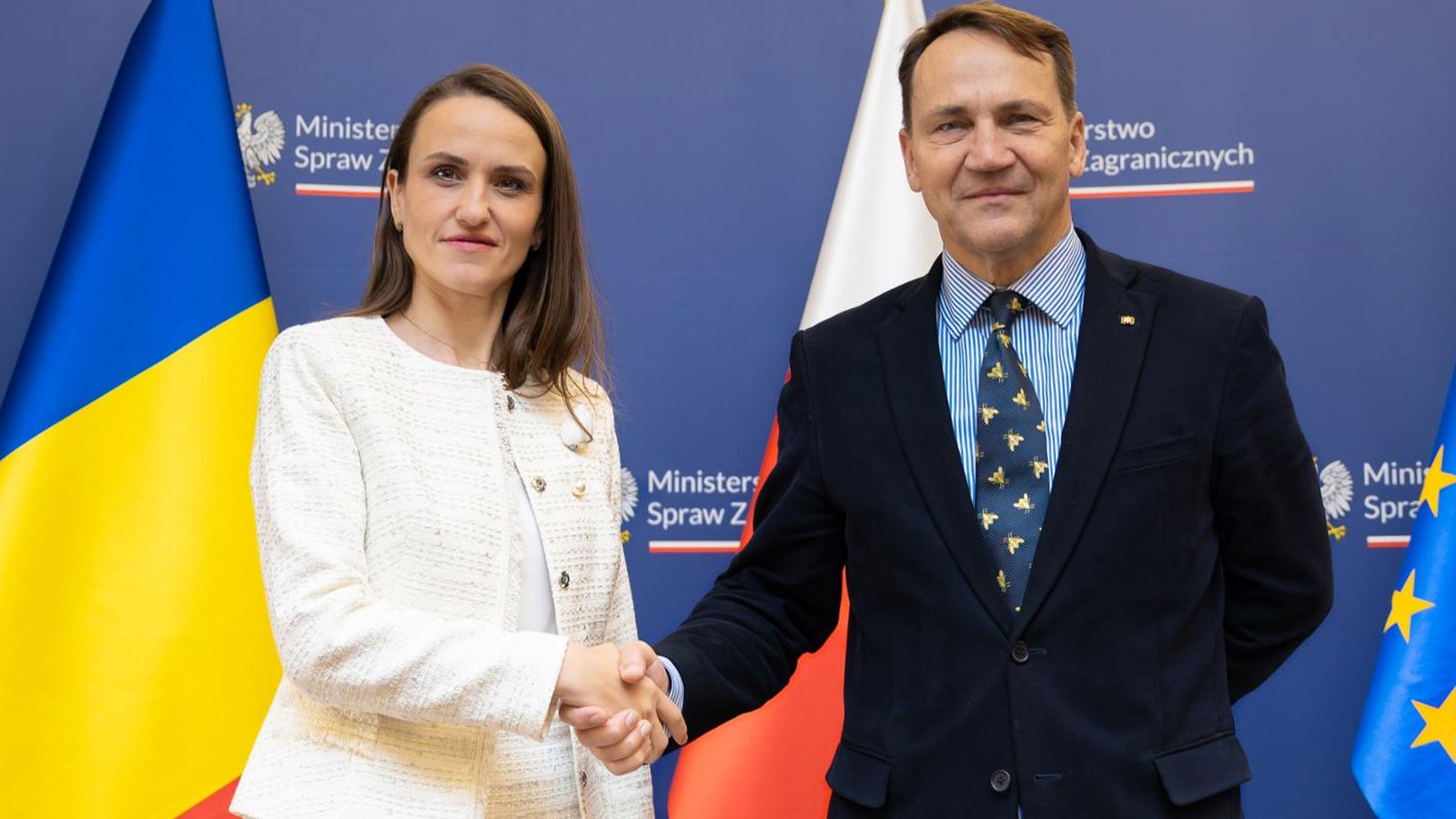
Executive capability snapshot
Romania presents a distributed European model in which foreign-ministry digital capability is most clearly visible through digital consular services, cyber and hybrid-threat diplomacy, institutional resilience, public-diplomacy initiatives and growing engagement with artificial intelligence as a foreign-policy and democratic-resilience issue. The model is strongly anchored in the European Union and NATO and depends on coordination between the Ministry of Foreign Affairs, specialised national authorities and international partners rather than on a single ministry-owned digital-diplomacy doctrine.
The clearest operational evidence comes from consular services. eConsulat provides an online interface through which Romanian citizens can access information, submit requests and interact electronically with consular personnel, while eViza supports online visa applications and connects externally submitted information to internal ministry processing and diplomatic missions or consular offices. Public data-protection information identifies the Ministry of Foreign Affairs as data controller and documents a controlled flow between the external eViza portal and the ministry’s internal processing environment. This is stronger evidence of digital institutional capability than the existence of a public-facing website alone because it shows a workflow connecting citizens, data, headquarters systems and overseas posts.
Cyber and hybrid resilience are another visible pillar. On 13–14 March 2026, DDoS activity affected the eViza and eConsulat platforms. According to the Ministry of Foreign Affairs, service was restored and no sensitive information was accessed; the published statement does not establish a ministry-wide after-action review. Romania also uses diplomacy to coordinate cyber resilience with Moldova and Ukraine, to engage NATO on hybrid threats and digital transformation, and to support European responses to foreign information manipulation and interference. These activities show a foreign ministry operating at the intersection of technical incidents, alliance coordination, strategic communication and regional security.
Artificial intelligence is present in the enabling national environment and increasingly in foreign-policy discussion. Romania’s National Strategy on Artificial Intelligence 2024–2027 is a whole-of-government framework whose implementation involves ministries according to their competences. MFA statements in 2026 also addressed AI-enabled information manipulation and the need for international cooperation against hybrid interference. The public record does not, however, establish a ministry-wide AI-governance framework for diplomatic analysis, briefing, translation, consular decision support or mission operations. National AI policy is therefore treated here as enabling context, not as automatic evidence of mature internal MFA AI capability.
Romania’s public record also shows a growing institutional-learning dimension. The ministry has pursued declassification, digitisation and public access to diplomatic archives, including cooperation with Norwegian partners, while its Romania–United States Exchange Program explicitly uses public diplomacy to deepen institutional and societal understanding. Together with cyber cooperation, consular digitisation and regional partnerships, these signals indicate an institution expanding the range of digital-era capabilities it can mobilise.
The central constraint is visibility into the internal operating layer. Public sources do not establish common mission-level digital maturity standards, a ministry-wide inventory of AI use cases, shared human-review thresholds, traceability requirements for AI-assisted work, common incident-escalation rules or a complete mechanism for converting cyber and narrative incidents into revised ministry-wide practice. DD therefore assesses Romania as established in institutional ownership, cyber and technology diplomacy and coordination/readiness, with developing evidence across strategy, AI governance, public diplomacy, mission-network capability and retained institutional authority.
Institutional signal map
| Dimension | Publicly visible signal | Evidence note |
|---|---|---|
| Institutional ownership | Established | MFA owns core diplomatic, consular and mission-network functions and visibly coordinates with specialised cyber, digital, EU and NATO actors. |
| Strategy and doctrine | Developing | Digital capability is visible across consular, cyber, resilience, public-diplomacy and AI-related activity, but no single public ministry-wide digital-diplomacy doctrine consolidates these elements. |
| AI governance in foreign affairs | Developing | Romania has a national AI strategy and MFA engagement with AI-enabled information threats, while ministry-specific internal AI rules and assurance requirements are not fully public. |
| Public diplomacy capability | Developing | Structured exchange, strategic communication and democratic-resilience activity are visible, but common measurement and digital relationship-capacity standards across missions are not public. |
| Cyber and technology diplomacy | Established | NATO, EU and regional cyber-resilience activity, attribution-related statements and trilateral cooperation provide sustained evidence of diplomatic engagement. |
| Mission-network capability | Developing | eConsulat, eViza and interinstitutional workflows connect headquarters and posts, while network-wide maturity, tool governance and continuity standards remain only partly visible. |
| Coordination and readiness | Developing | The MFA's published account of the 13–14 March 2026 eViza and eConsulat incident documents response to a specific service disruption. National, EU, NATO and regional activity documents coordination in particular policy fields. Public sources do not yet establish shared, tested fallback, exercises and learning across the full ministry and mission network. |
| Sovereignty, continuity and human authority | Developing | Data-protection, security and continuity signals are visible, but public evidence on AI traceability, vendor dependence, exit capacity and human-review thresholds remains incomplete. |
The labels describe the public evidence available through 7 August 2026 for the scope stated in each row. National policy is distinguished from foreign-ministry practice; announced programmes are distinguished from deployed services. A limited public record does not establish absence of capability. Later targeted updates, if any, are dated beside the relevant claim.
Institutional ownership
Romania’s model is institutionally distributed. The Ministry of Foreign Affairs owns foreign policy, diplomatic representation, consular services and the overseas mission network, while cyber defence, digital-government infrastructure, artificial-intelligence policy and other technical capabilities are shared with specialised national bodies. This distribution is consistent with an EU and NATO member state in which technology-related foreign policy often requires coordination across ministries, regulators, security institutions and alliance mechanisms.
The ministry’s legal organisation provides the formal basis for diplomatic and consular responsibilities, while operational digital ownership is visible in concrete services. eConsulat is a ministry-operated consular platform designed to allow citizens to obtain information, initiate requests and interact online with consular personnel. eViza supports visa processing, and its data-protection notice identifies MFA as the controller of the personal data collected for visa applications. It also states that information submitted through the external portal is made available for processing to Romania’s diplomatic missions and consular offices through the ministry’s internal environment.
These arrangements matter because institutional digital capability is not demonstrated simply by an online interface. It is demonstrated when the interface is connected to responsibility, processing rules, internal systems, mission workflows and human decision authority. Romania’s consular platforms provide public evidence of that connection.
Cyber ownership is more distributed. The ministry does not replace the specialist cybersecurity authorities; instead, it represents and coordinates the foreign-policy dimension. Public activity in 2026 included engagement with NATO’s senior cyber and hybrid-threat leadership, support for trilateral cyber cooperation with Moldova and Ukraine, diplomatic condemnation of hostile cyber operations and participation in wider EU and NATO resilience discussions. This creates a model in which technical institutions generate specialist capability while MFA converts relevant issues into diplomatic positions, partnerships and international coordination.
The institutional challenge is the interface between these actors. Public sources document individual initiatives and incidents but do not publish a complete operating map for how technical assessment, legal analysis, diplomatic interpretation, public communication and political authority are combined when a high-impact digital incident develops rapidly.
Strategy and doctrine
Romania does not publicly frame its foreign-ministry digital capability through one consolidated digital-diplomacy strategy. Instead, doctrine is visible through several connected layers: national AI policy, EU and NATO commitments, cyber and hybrid-resilience diplomacy, digital consular services, democratic-resilience activity, public diplomacy and institutional modernisation.
The National Strategy on Artificial Intelligence 2024–2027 is the clearest national AI-policy framework. Government Decision 832/2024 requires ministries and other central public authorities to implement measures within their competences. This creates a national governance environment relevant to MFA, but the strategy is horizontal and cross-sectoral. It should not be interpreted as proof that the ministry has already adopted a complete internal governance framework for diplomatic AI use.
On security, Romania’s foreign-policy activity gives cyber and hybrid resilience a prominent place. The ministry has connected Black Sea security, critical infrastructure, foreign information manipulation, cyber operations and alliance resilience. In 2026, Romania also secured Bucharest as host of NATO’s Annual Hybrid Symposium, with MFA presenting the country’s role as a bridge between EU and NATO expertise, including the presence in Bucharest of the European Cybersecurity Competence Centre. The ECCC is an EU institution and not an MFA body; its location is therefore relevant as strategic ecosystem context rather than direct evidence of ministry capability.
The strategy signal is Developing because the components are increasingly coherent but remain spread across different policy fields. A more explicit public architecture would show how consular digitisation, cyber diplomacy, AI governance, narrative resilience, mission operations and institutional learning fit together under common readiness and authority principles.
AI governance in foreign affairs
Romania’s national AI strategy establishes a policy environment for public-sector adoption and wider national development. The strategy covers governance, skills, infrastructure, research, innovation and the responsible use of AI. MFA is one of the public institutions situated within this broader implementation environment, but the public strategy does not function as a ministry-specific operating manual for diplomatic AI.
Foreign-policy relevance is visible in another way: through information-space resilience. In May 2026, the Romanian foreign minister described foreign information manipulation and interference as increasingly supported by artificial intelligence and cyber tools, emphasising information sharing, international cooperation and legal safeguards while also stressing freedom of expression and media independence. This is evidence that AI is being incorporated into diplomatic threat assessment and democratic-resilience discussions.
What remains much less visible is internal AI adoption. Public sources reviewed for this profile do not establish whether MFA uses generative AI for diplomatic reporting, summarisation, translation, consular triage, policy drafting or strategic analysis. They also do not publish ministry-wide rules for model approval, sensitive-data handling, verification, human review, traceability, logging or the treatment of model uncertainty.
The appropriate assessment is therefore Developing. Romania has a credible national AI-governance context and a foreign ministry engaging AI as an international and resilience issue, but public evidence is not yet sufficient to describe a mature ministry-specific AI-governance architecture.
Public diplomacy capability
Romania’s public-diplomacy capability is visible through cultural, educational, policy-communication and exchange mechanisms rather than through a single branded digital programme. The Romania–United States Exchange Program announced in April 2026 is particularly useful evidence because MFA explicitly described the MECEA-based programme as an instrument of public diplomacy. It is designed to facilitate visits, institutional dialogue, exchange of expertise and deeper understanding of Romanian political, economic, security, technological, academic and cultural contexts.
The ministry also uses diplomatic communication in the resilience domain. Statements and ministerial engagements on foreign information manipulation, cyber operations and democratic resilience are not simply media outputs; they form part of coalition building, attribution, deterrence and public explanation. Romania’s engagement with Moldova is especially relevant because the countries share a language and overlapping information space, creating a practical need for cross-border understanding of narrative threats.
Public diplomacy is therefore broader than social-media visibility. The strongest signals in Romania’s current model concern institutional exchange, strategic explanation, international relationship building and resilience cooperation. Public evidence is more limited on common evaluation methods across missions, audience research standards, relationship-capacity metrics and how mission-level digital engagement is converted into institutional learning at headquarters.
Cyber and technology diplomacy
Cyber and hybrid-security diplomacy is one of Romania’s strongest publicly visible capabilities. In February 2026, Romania, Moldova and Ukraine advanced structured trilateral cooperation through a memorandum among their national cybersecurity authorities, an initiative publicly connected to foreign-minister-level trilateral diplomacy. The arrangement illustrates how diplomatic convening can create a framework within which specialist technical bodies cooperate.
Romania also engages cyber and hybrid issues through NATO and the European Union. Meetings with NATO’s leadership for cyber, digital transformation and hybrid threats addressed Russian cyber and hybrid activity, Black Sea security and collective resilience. The decision to host the 2026 NATO Annual Hybrid Symposium further demonstrates diplomatic convening capacity in this field.
The ministry’s July 2026 condemnation of cyber activity attributed to FSB-controlled groups is another form of technology diplomacy. Such statements connect technical attribution and threat intelligence produced across national and allied systems with diplomatic signalling, international norms and coordinated restrictive measures.
Technology diplomacy extends beyond cybersecurity. Bilateral consultations with partners including Kenya and Mozambique have included digitalisation and cybersecurity among cooperation areas. Romania’s broader digital and AI policy environment also gives the ministry potential entry points for international cooperation in emerging technology.
The strength of the model lies in coalition building and regional resilience. The public evidence gap concerns the internal conversion chain: how technical evidence reaches MFA, how confidence levels are communicated, how diplomatic consequences are assessed, who authorises escalation and how lessons are retained after an incident.
Mission-network capability
Romania’s overseas network is supported by mature public-facing digital consular infrastructure. eConsulat enables citizens to initiate consular procedures online, while eViza supports visa applications and connects applicant information to diplomatic missions and consular offices. These systems demonstrate a mission-network function that is digitally mediated rather than purely headquarters-based.
The July 2026 public explanation of preparations for electronic identity-card applications abroad provides an additional operating signal. MFA described a technical and procedural workflow in which diplomatic missions and consular offices would collect data, transmit it through the ministry’s information system to the competent domestic authority, receive the personalised document back through MFA channels and then activate and issue it to the citizen. This is evidence of interinstitutional workflow design across the mission network; it should not be interpreted as proof that the service was already universally deployed at all posts at the time of review.
The March 2026 DDoS incident also demonstrates why mission-network capability depends on continuity. Disruption of centrally provided digital platforms can affect citizens and posts simultaneously. MFA’s public statement indicated that protection systems and specialists mitigated the attack and restored normal service. The incident provides direct evidence of response capability but less evidence on longer-term after-action review, redundancy, fallback procedures and cross-mission lessons.
Romania’s network signal is therefore Developing. There is strong evidence of digital service infrastructure and interinstitutional workflows, while common mission-level maturity standards, tool inventories, AI-use rules, knowledge-retention mechanisms and explicit network-wide continuity requirements remain less visible publicly.
Capability in practice
eConsulat and eViza as mission-network service infrastructure
What happened? Romania developed national digital interfaces for consular requests and visa applications that connect citizens and applicants with MFA processing and the diplomatic-consular network.
Capability visible: Digital service delivery, structured data flows, mission–headquarters interaction, access to consular procedures and formal data-protection responsibility.
What remains unknown? Public sources do not provide a complete picture of system architecture, vendor dependence, fallback capacity, service-level resilience or how digital-service performance is compared across missions.
Transferable lesson: A consular portal becomes institutional capability when it is connected to accountable processing, mission workflows, secure data handling, human escalation and continuity arrangements.
Response to the March 2026 DDoS attacks
What happened? According to a Ministry of Foreign Affairs statement reproduced by AGERPRES, DDoS activity affected eViza and eConsulat during the afternoon of 13 March and the early hours of 14 March 2026. The ministry reported temporary slowdowns and short periods of unavailability, subsequent restoration of normal operation and no access to sensitive information. This source documents the ministry's account of the incident and its response; it does not publish an independent technical audit or a network-wide continuity test.
Capability visible: Incident detection, technical mitigation, public communication, service restoration and coordination with specialist protection capacity.
What remains unknown? The public record does not describe the full incident command structure, fallback services for affected users, post-incident review, recovery metrics or changes made after the event.
Transferable lesson: Digital diplomatic services require tested continuity and recovery arrangements because availability itself becomes part of consular and institutional trust.
Romania–Moldova–Ukraine cyber cooperation
What happened? Romania used the trilateral diplomatic format with Moldova and Ukraine to support more structured cooperation among national cybersecurity authorities, culminating in a memorandum signed in February 2026.
Capability visible: Diplomatic convening, regional coalition building, conversion of political commitment into specialist cooperation and alignment around resilience against shared cyber threats.
What remains unknown? Operational information-sharing procedures, escalation thresholds, exercise routines and the exact interface between technical authorities and foreign ministries are not fully public.
Transferable lesson: Regional cyber diplomacy is strongest when political dialogue creates repeatable operating relationships among the institutions that hold technical capability.
FIMI, AI-enabled interference and democratic resilience
What happened? Romanian diplomacy elevated foreign information manipulation and interference, including the use of AI and cyber tools, in bilateral and EU-level discussions and linked the issue to democratic resilience and cooperation with neighbouring partners.
Capability visible: Strategic threat framing, cross-border information-space awareness, international coordination and an effort to balance resilience measures with freedom of expression and media independence.
What remains unknown? Public sources do not establish a common MFA methodology for narrative monitoring, confidence assessment, escalation, mission reporting or measuring whether interventions reduce harm.
Transferable lesson: Narrative resilience requires a decision architecture connecting monitoring, local context, legal safeguards, diplomatic judgment and cross-government coordination.
Romania–United States Exchange Program
What happened? MFA launched a MECEA-based exchange programme intended to deepen mutual understanding through visits, institutional dialogue and exposure to Romanian political, economic, security, technological, academic and cultural contexts.
Capability visible: Public diplomacy as relationship infrastructure, long-term network building and connection between foreign-policy objectives and institutional exchange.
What remains unknown? Public material does not yet establish programme-level outcome metrics, digital-community continuity between visits or how lessons are integrated into wider mission and headquarters public-diplomacy planning.
Transferable lesson: Public diplomacy creates durable capability when programmes are designed around relationships, institutional learning and repeat engagement rather than one-off visibility.
Readiness signals
Prepare
Established
Romania has functioning consular platforms, established diplomatic ownership, specialist national cyber institutions, EU and NATO interfaces and recurring regional partnerships. These provide a credible preparation base even without a single ministry-wide digital-diplomacy strategy.
Sense
Developing
Cyber incidents, hybrid threats and information manipulation are actively recognised in foreign-policy activity. Public evidence is less complete on shared mission-level monitoring methods, common confidence scales and traceability for technology-assisted analysis.
Align
Established
Romania repeatedly coordinates across MFA, national specialist authorities, EU and NATO institutions and regional partners. The cyber trilateral and alliance activity provide strong evidence of alignment capacity.
Respond
Established
The March 2026 platform incident, diplomatic cyber statements, regional resilience initiatives and consular digital services demonstrate recurring response capability rather than isolated experimentation.
Recover
Partially evidenced
Service restoration after the DDoS incident and wider continuity commitments are visible. Public sources provide less detail on formal post-incident review, fallback service design, cross-mission learning and recovery metrics.
Adapt
Developing
Romania is expanding digital workflows, archive digitisation, cyber partnerships and public-diplomacy mechanisms. The public record does not establish a single institutional process through which operational lessons are consistently converted into revised MFA-wide standards, training and governance.
DD assessment
Institutional strengths
- Mature digital consular interfaces connected to diplomatic and consular workflows.
- Strong cyber and hybrid-resilience diplomacy anchored in EU, NATO and regional cooperation.
- Demonstrated capacity to coordinate diplomatic and technical actors around shared security challenges.
- Growing engagement with AI-enabled information threats and democratic resilience.
- Public-diplomacy instruments focused on institutional exchange and relationship building.
- Emerging institutional-learning signals through archive digitisation, declassification and transparency.
Structural tensions
- Distributed technical ownership requires reliable interfaces between MFA, specialist authorities and political decision-makers.
- National AI-policy maturity should not be treated as evidence of mature internal diplomatic AI governance.
- Dependence on centralised digital consular platforms increases the importance of continuity, fallback and recovery.
- Mission-level consistency becomes harder to sustain across different local operating environments.
- Cyber and narrative resilience require coordination across technical, legal, communications and diplomatic functions that may operate on different timelines.
Public evidence limitations
Public sources do not provide a complete account of:
- ministry-wide internal AI use cases;
- AI approval, assurance and human-review thresholds;
- rules for AI-assisted processing of sensitive diplomatic information;
- common mission-level digital maturity standards;
- shared traceability requirements for AI-assisted briefings, summaries or translations;
- network-wide escalation thresholds for cyber and narrative incidents;
- post-incident review and institutional-memory processes;
- vendor dependence, portability and exit capacity for critical digital services.
Transferable lessons
- Treat digital consular services as mission-network capability, not only as online portals.
- Use foreign-ministry convening power to connect specialist cyber institutions across borders.
- Separate national AI strategy from evidence of ministry-specific AI governance.
- Build narrative resilience around coordination, confidence and decision authority rather than monitoring volume alone.
- Convert incidents and exchanges into institutional learning that survives staff rotation and technology change.
Methodology and limitations
This profile is based on publicly available material and assesses visible institutional arrangements and signals. It does not claim access to confidential systems, classified processes or non-public operational practice. AGERPRES items used here are clearly identified in the evidence register as institutional press-release mirrors where they reproduce Ministry of Foreign Affairs communications; they are not treated as independent reporting. National digital-government and cybersecurity capacity is treated as an enabling condition rather than automatic evidence of foreign-ministry capability. Limited public evidence does not indicate absence of capability.
A strategy or official announcement establishes an institution's stated position; implementation and results require separate evidence. DD interpretations are identified as analysis. Substantive updates are dated and summarised in the version history.
How to cite
Recommended citation
Iancu, Laura. “Romania Digital Diplomacy Capability Profile.” Diplomats.Digital, Digital Diplomacy Capability Profile 10, version 1.2, 2026.
APA
Iancu, L. (2026). Romania digital diplomacy capability profile (Version 1.2). Diplomats.Digital.
Chicago
Laura Iancu, “Romania Digital Diplomacy Capability Profile,” Digital Diplomacy Capability Profile 10, version 1.2 (Diplomats.Digital, 2026).
BibTeX
@misc{iancu2026romania_digital_diplomacy,
  author       = {Laura Iancu},
  title        = {Romania Digital Diplomacy Capability Profile},
  year         = {2026},
  publisher    = {Diplomats.Digital},
  howpublished = {Digital Diplomacy Capability Profile 10},
  note         = {Version 1.2},
  url          = {https://diplomats.digital/country-profiles/romania-digital-diplomacy}
}
Related DD knowledge
Official and institutional sources
- eConsulat — Servicii Consulare, Ministry of Foreign Affairs of Romania
- eViza — Ministry of Foreign Affairs of Romania
- eViza Data Protection Information — Ministry of Foreign Affairs of Romania
- Government Decision 832/2024 approving the National Strategy on Artificial Intelligence 2024–2027
- National Strategy on Artificial Intelligence 2024–2027 — Annex
- Government Decision 16/2017 on the organisation and functioning of the Ministry of Foreign Affairs
- E-ARC — Ministry of Foreign Affairs of Romania
- E-ARC platform
- MFA press release mirror: cyberattack against eViza and eConsulat, 14 March 2026 (institutional record republished by a news agency)
- MFA press release mirror: Romania–Moldova–Ukraine cybersecurity memorandum, 20 February 2026 (institutional record republished by a news agency)
- Joint Statement of the Foreign Ministers of the Odesa Triangle — Ministry of Foreign Affairs of Ukraine
- Odesa Triangle meeting — Ministry of Foreign Affairs of the Republic of Moldova
- MFA press release mirror: meeting with NATO Special Coordinator for Hybrid Threats, 17 February 2026 (institutional record republished by a news agency)
- MFA press release mirror: NATO Annual Hybrid Symposium in Bucharest, 7 May 2026 (institutional record republished by a news agency)
- MFA press release mirror: FIMI, AI-enabled interference and democratic resilience, 15 May 2026 (institutional record republished by a news agency)
- MFA press release mirror: condemnation of hostile cyber activities linked to Russia’s FSB, 13 July 2026 (institutional record republished by a news agency)
- MFA press release mirror: Romania–United States Exchange Program, 1 April 2026 (institutional record republished by a news agency)
- MFA press release mirror: political consultations with Kenya, 11 February 2026 (institutional record republished by a news agency)
- MFA press release mirror: Romania–Norway cooperation on diplomatic-archive digitisation, 13 May 2026 (institutional record republished by a news agency)
- MFA press release mirror: electronic identity-card workflow through diplomatic missions and consular offices, 16 July 2026 (institutional record republished by a news agency)
- MFA press release mirror: declassification and digitisation of diplomatic archives, 21 May 2026 (institutional record republished by a news agency)
- MFA press release mirror: Black Sea security and critical infrastructure, 13 July 2026 (institutional record republished by a news agency)
- MFA press release mirror: bilateral cooperation with Mozambique including digitalisation, 2 July 2026 (institutional record republished by a news agency)
- MFA press release mirror: FIMI and European democratic-resilience agenda, 23 February 2026 (institutional record republished by a news agency)
- European Cybersecurity Competence Centre — European Union
Corrections and additional evidence
Submit a factual correction or additional official source through the Diplomats.Digital contact page.