Digital Diplomacy
The foundational knowledge area of Diplomats.Digital. A structured knowledge area on digital diplomacy: definitions, frameworks, examples, and trends shaping how states conduct foreign policy in digital environments.
Ten curated knowledge areas across diplomacy and digital institutions. Choose an area, enter its hub, then read the guides and frameworks inside.
Each knowledge area is a curated hub with definitions, frameworks, foundational guides and related analysis. Enter an area to see how Diplomats.Digital organises its research inside that field.
The foundational knowledge area of Diplomats.Digital. A structured knowledge area on digital diplomacy: definitions, frameworks, examples, and trends shaping how states conduct foreign policy in digital environments.
Artificial intelligence as a diplomatic actor, instrument, and risk. How artificial intelligence is reshaping foreign affairs, diplomatic practice, and institutional decision-making — governance, risk, and emerging frameworks.
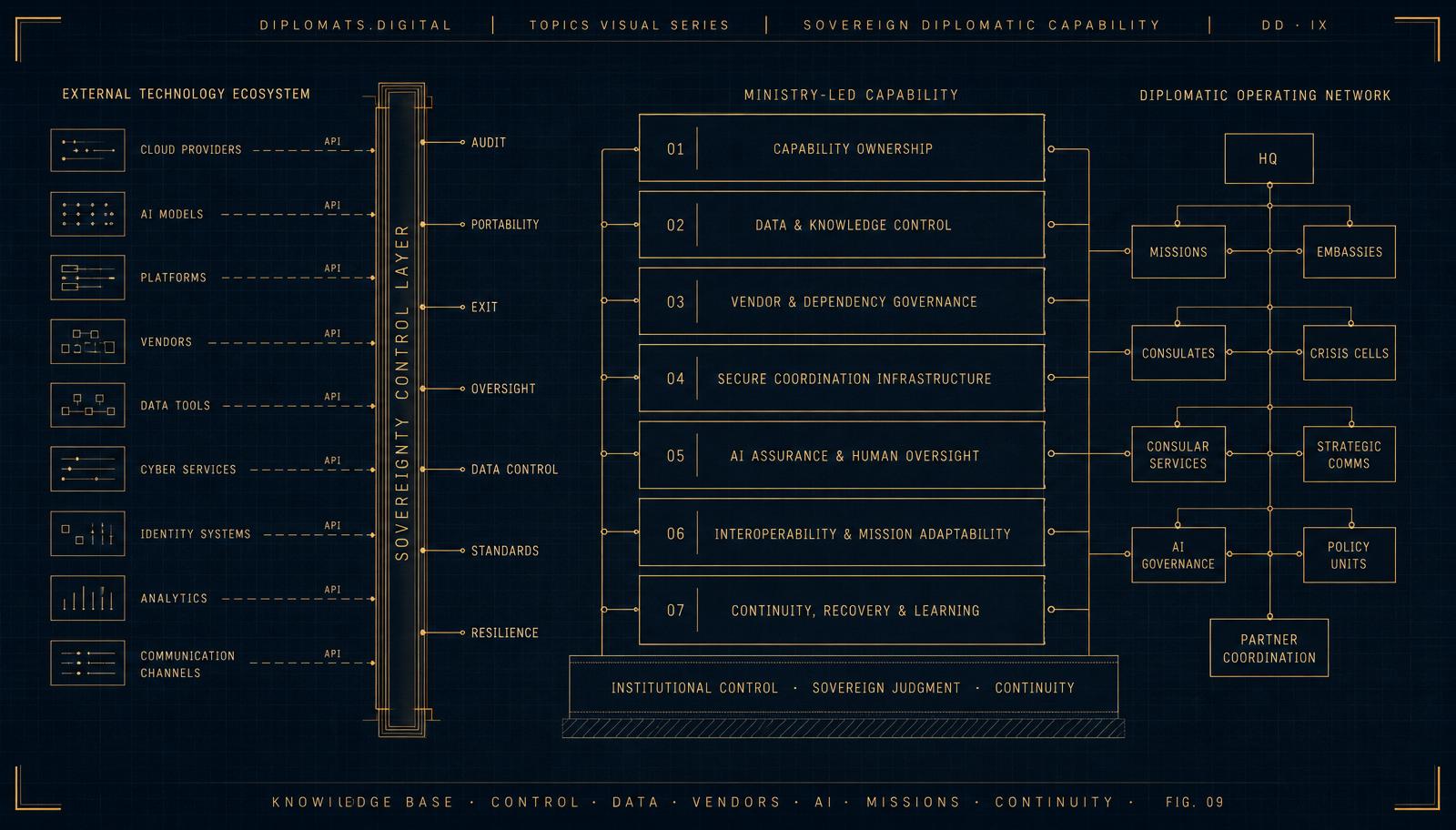
The infrastructure layer of modern diplomacy. Technology stacks, platforms, and digital infrastructure powering modern diplomatic services — from secure communications to consular systems.

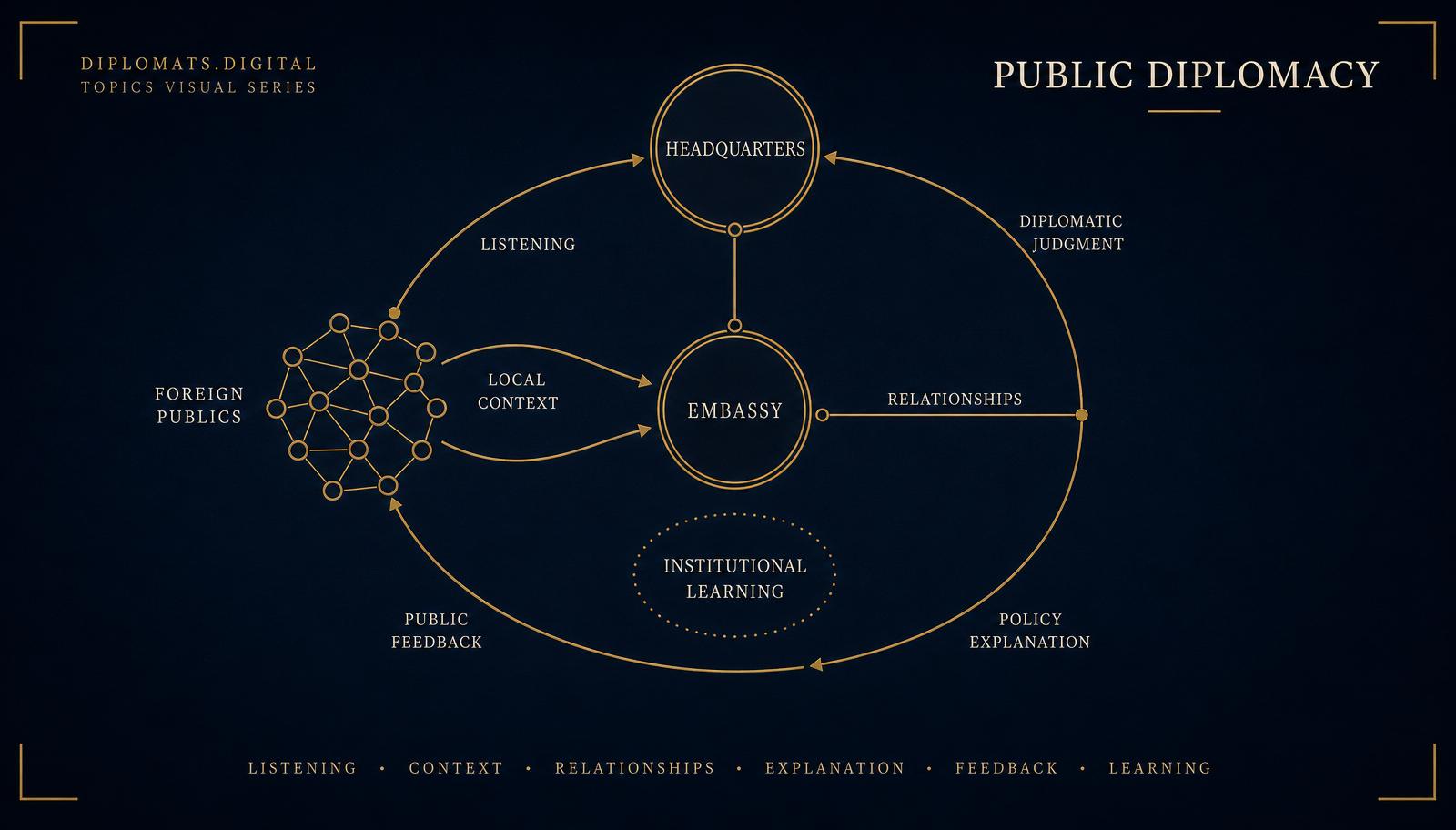
Engagement with foreign publics as an instrument of statecraft. Public diplomacy as a discipline: engaging foreign publics, building long-term influence, and operating across cultural and informational environments.

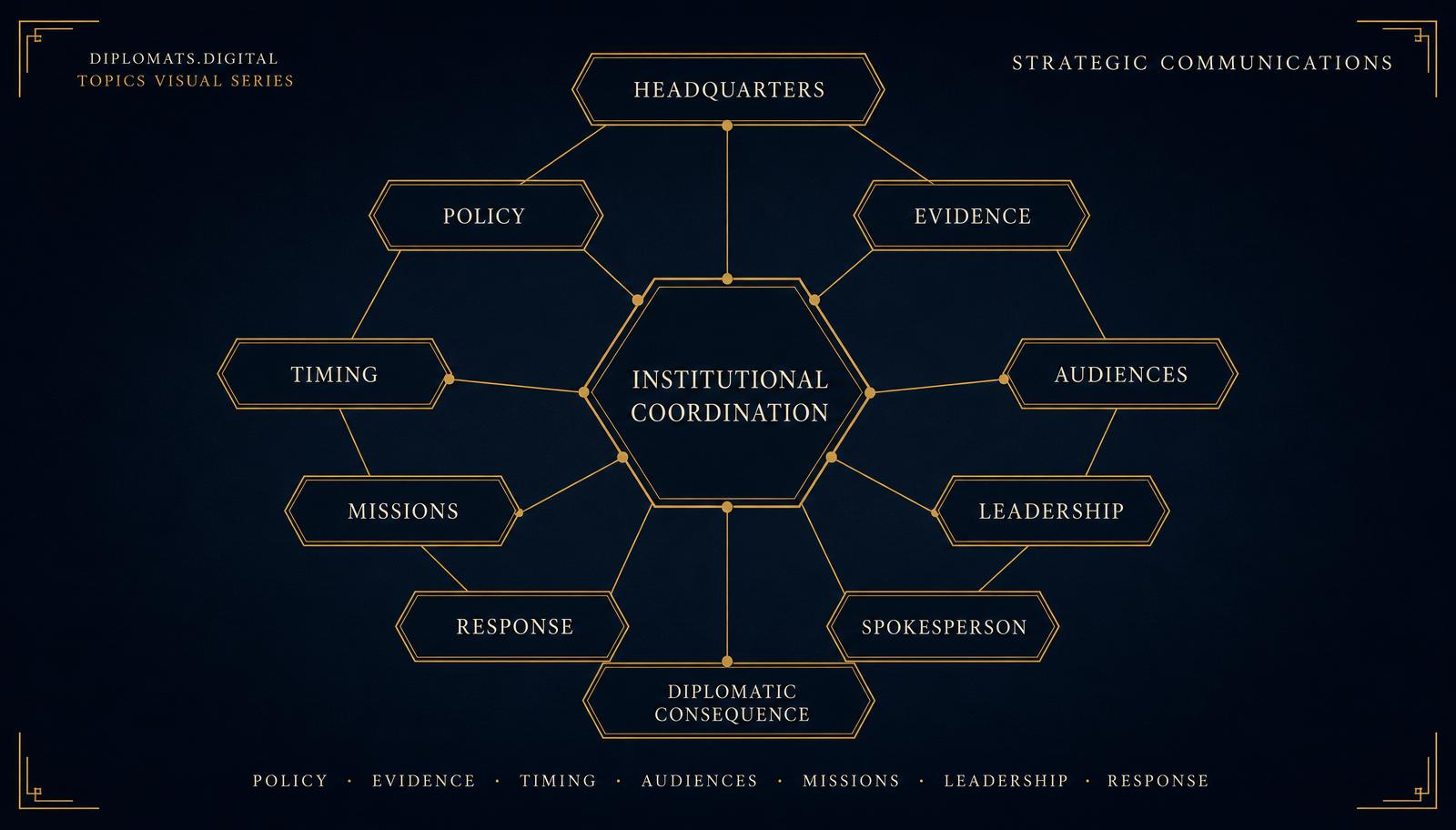
The discipline of speaking with consequence. Strategic communications for diplomatic institutions — doctrine, message architecture, and the discipline of speaking with consequence.

Holding institutional narrative under sustained pressure. Narrative resilience as an institutional capability — countering disinformation, monitoring influence operations, and designing durable strategic narratives.

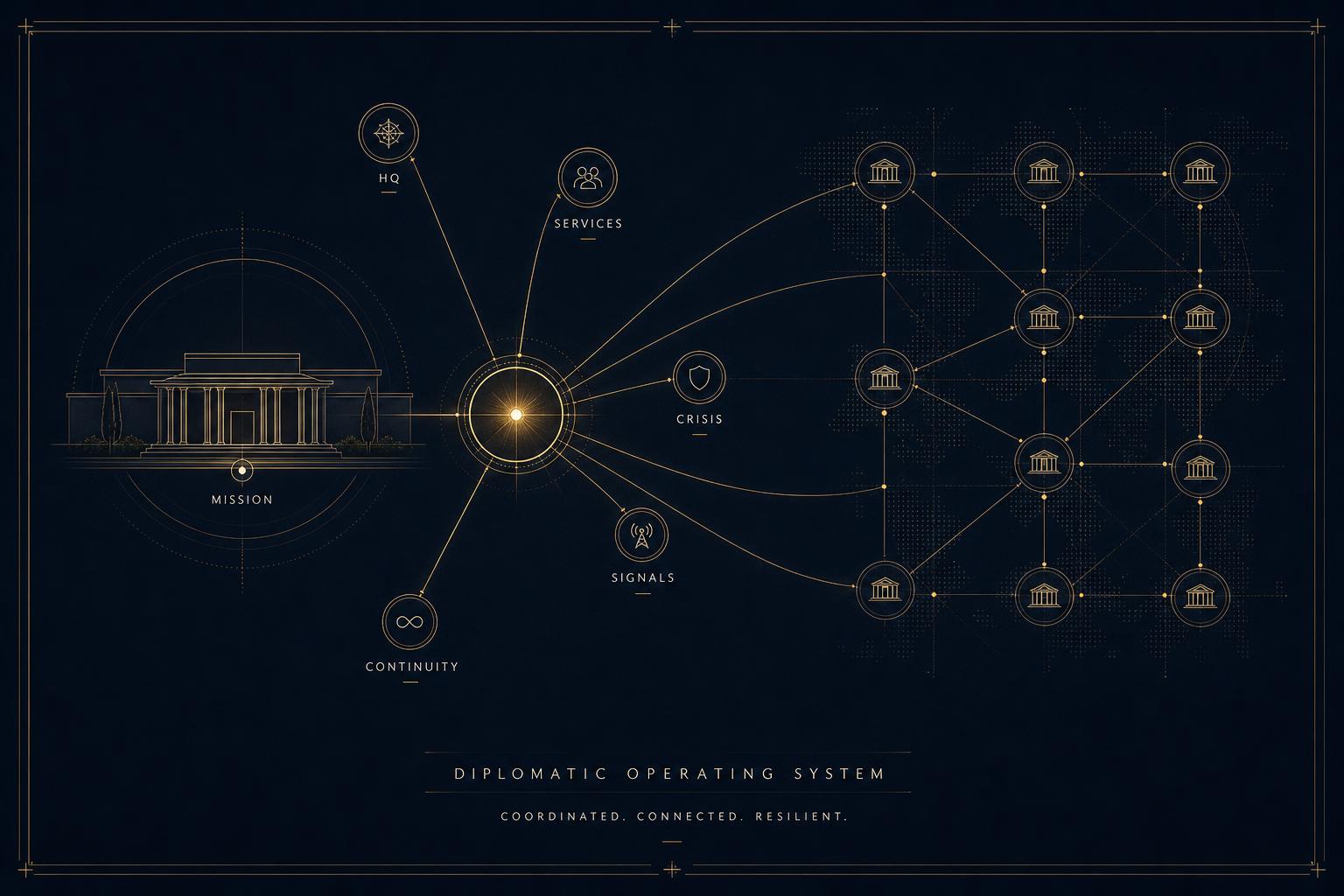
Modernizing the operating model of diplomatic missions. How embassies and consulates modernize operations, services, and engagement — strategy, systems, and the digital posture of diplomatic missions.

Reform inside ministries of foreign affairs. How ministries of foreign affairs reform, modernize, and adapt — talent, structure, technology, and the institutional design of diplomatic services.
The exercise of national power in digital environments. Digital statecraft as the exercise of national power through and within digital environments — geopolitics, technology, and strategic competition.

Long-horizon thinking for diplomatic institutions. Long-horizon analysis of diplomacy: scenarios, research, and the institutional questions shaping the next decade of foreign affairs.
Evidence-based profiles of institutional ownership, strategy, AI governance, public diplomacy, cyber and technology diplomacy, mission networks and readiness. For institutional learning, not ranking.
Institutional frameworks for digital diplomacy, AI governance, readiness and reform.
A working vocabulary for foreign ministries operating in digital environments.
Reference materials, briefings and diagnostics from Diplomats.Digital.