
Series · Digital Sovereignty Under Interdependence
The Strait of Hormuz: Who Keeps a Global Chokepoint Governable?
Passage, payment, insurance and decision authority before conflict, under pressure and through recovery.
Research cut-off: 7 October 2026 · Revised research edition. Event counts and assessments retain their source dates. The recovery analysis describes conditional futures.
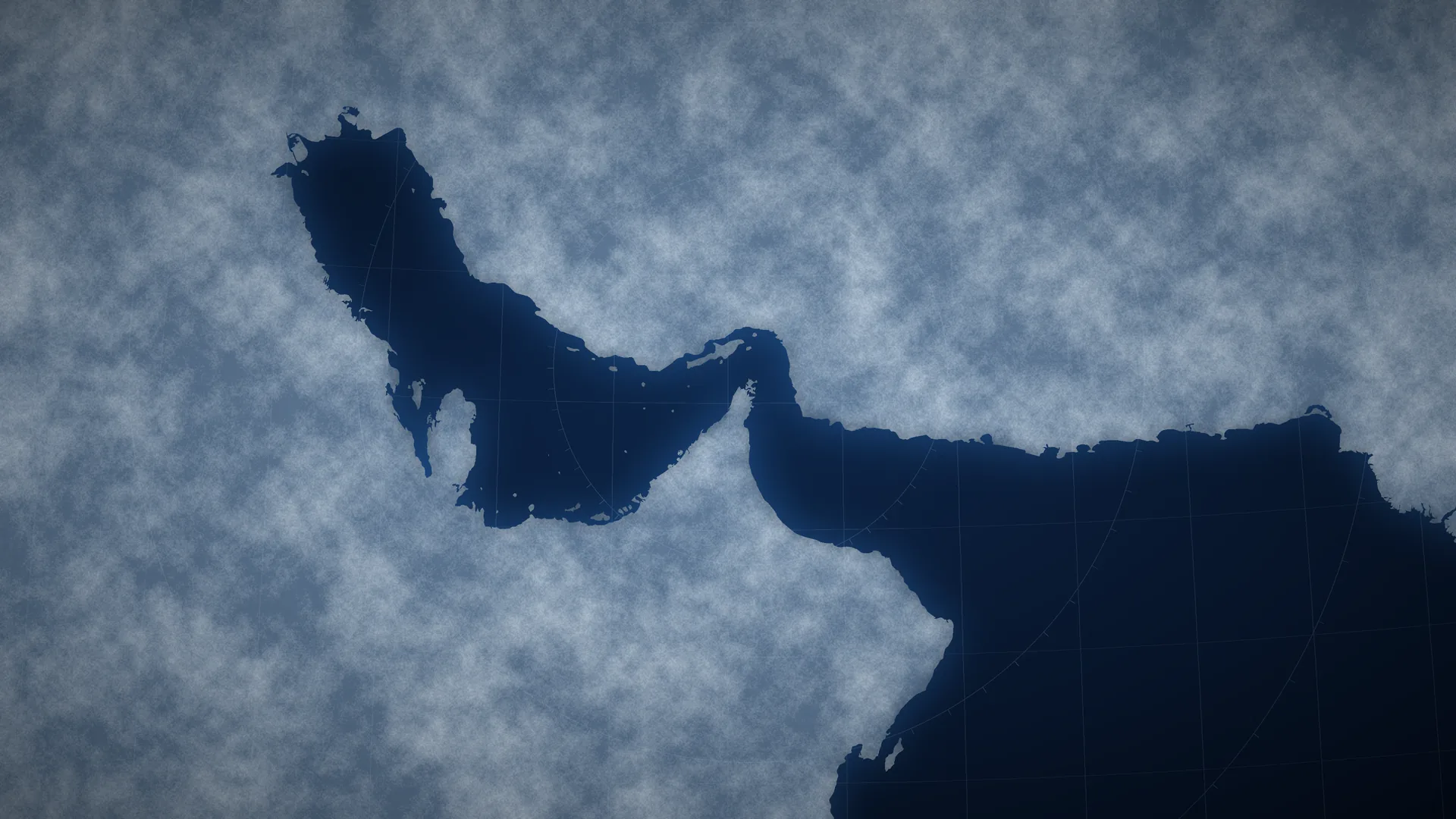
Illustration by Diplomats.Digital, rendered from Natural Earth coastline data (public domain). Not satellite imagery.
In this article
Start With the Governance Stack
A government can announce that a shipping route is open while shipowners, insurers and crews reach different conclusions about using it. Each controls a condition that the others need. A naval assurance cannot settle an insurance exclusion. An insurance policy cannot clear a mine warning. A diplomatic agreement needs operational arrangements that survive the next incident.
Hormuz brings these dependencies into unusually sharp focus. Its governability rests on the alignment of passage rights, credible security information, commercial cover, payment channels, functioning ports and emergency support. When those elements diverge, access becomes selective, expensive and difficult to sustain.
For foreign ministries, the practical task is to identify where that alignment breaks and which authority can restore it. DD uses a chokepoint governance stack to organise the briefing:
- Legal authority: coastal jurisdiction, passage rights and competing interpretations.
- Operational access: navigable routes, threat assessments and coordination arrangements.
- Commercial permission: insurance, charter obligations, banking and sanctions exposure.
- Information integrity: trusted warnings, vessel identification, positioning and incident evidence.
- Emergency capability: rescue, medical evacuation, refuge, salvage and pollution response.
- Retained authority: identifiable people empowered to halt, revise or resume an operation.
These layers provide a framework for assessing the crisis and the terms of recovery. They also explain why different actors can describe the same strait as open, restricted or commercially unusable.
Who Owns Hormuz?
This distinction becomes consequential when an actor demands payment or information in return for safe passage. Such a demand needs separate scrutiny of its legal basis, its recipient and the consequences of compliance. The ability to make a demand enforceable at sea does not establish a generally recognised entitlement to regulate the strait.
What Has Changed So Far
The historical baseline is substantial: EIA estimates that Hormuz carried 20.9 million barrels per day in the first half of 2025, equivalent to approximately 20% of global petroleum liquids consumption. Its estimate for LNG flows over the same period is 11.4 billion cubic feet per day, exceeding one-fifth of global LNG trade. These are pre-2026 benchmarks, not estimates of current throughput. [5]
The present disruption developed after the US–Israeli strikes on Iran and Iranian retaliation beginning on 28 February 2026, as described in Gard's contemporaneous account. [6]
Three dated observations show the distance between normal circulation and today's operating environment. UKMTO's 2 October overview assessed vessel traffic at approximately 75% below pre-conflict levels. IMO's regional incident register recorded 93 confirmed incidents and 24 seafarer fatalities as of 6 October. OFAC's 24 August alert addressed Iranian demands for passage payments and services, including dealings with named designated intermediaries. These sources measure different aspects of the crisis; the IMO tally covers Hormuz and the wider Middle East. [7][8][9]
The institutional consequence is a multiplication of decisions required for a voyage. Governments, operators and service providers need to establish which movements are physically possible, legally supportable, covered by insurance and compatible with crew safety.
Three Hard Filters
1. Passage and Payment
The critical distinction is between a right of passage, an operational route and an assurance offered by a particular actor.
JMIC's 12 July 2026 advisory described a southern route as available, assessed the regional threat as severe and stated that coordination with US naval shipping advisers was voluntary. It also rejected the existence of a controlling passage authority or required fee. That is a dated operational communication from a security coordination body, not an independent guarantee of safety or a current navigation instruction. [10]
Sanctions make the payment map decisive. OFAC's 24 August alert warns that US and non-US persons can face sanctions risks from engaging with the designated Persian Gulf Strait Authority, Persian Gulf Marine Insurance Company and HormuzSafe Marine Services Authority. The warning extends to certain services and information demands even without payment. It also covers indirect and non-cash arrangements. Applicable prohibitions, exemptions and authorisations require transaction-specific assessment across the jurisdictions involved. US rules should be identified as US rules; passage through Hormuz alone should never be treated as proof of sanctions evasion. [9]
For a ministry, the resulting brief should identify the service requested, the recipient, intermediaries, the legal basis relied upon and the precedent that official support would create. A payment framed as insurance or facilitation can have consequences beyond its commercial label.
2. Insurance and Contractual Exposure
Insurance determines who can absorb the consequences of a voyage. Hull, cargo, protection and indemnity liability cover, and war-risk arrangements address different exposures. A statement that a ship is “insured” leaves too much unresolved.
Gard's 3 March 2026 analysis documented war-risk cancellation notices and higher additional premiums. It also explained how voyage orders, safe-port obligations, war clauses and delay costs depend on the governing contract. Under English law, invoking force majeure requires a contractual basis and compliance with its terms; conflict does not automatically suspend every obligation. [11]
A useful briefing therefore needs the scope and duration of cover, exclusions, cancellation provisions, claims-paying arrangements and the allocation of additional premiums or delay costs. It should identify the point at which the commercial parties would seek government assistance.
There is no defensible universal “Hormuz insurance price.” For scale only, a hypothetical 0.5% additional premium on an insured hull value of $100 million is $500,000 for the period quoted. This is arithmetic, not a market quotation; voyage economics require a dated vessel-specific offer.
3. A Trustworthy Operating Picture
UKMTO's October overview identified a significant measurement problem: separately reported US-facilitated transit figures were roughly five times AIS-observed movements in the comparison it presented. It stated that it could not independently verify those facilitation figures. [7]
This is a warning against converting a vessel-tracking screen directly into a ministerial conclusion. Traffic counts, unique ships, cargo volumes and successful deliveries answer different questions. Ballast and laden movements differ. Missing AIS observations can reflect collection gaps, security decisions or deceptive behaviour.
IMO recognises the security sensitivity of AIS information, while OFAC's maritime advisory distinguishes legitimate safety-related shutdowns from deceptive manipulation and stresses documentation. An AIS gap requires investigation and corroboration. [12][13]
DD's implication is operational: every dashboard used for a consequential decision should disclose its time window, coverage, confidence and missing observations. AI-assisted analysis should preserve these limitations in the output presented to decision-makers.
Declared Closed: What the Evidence Establishes
This review documents eleven dated episodes of closure-related messaging between 28 February and 4 October 2026. This is a selected register of announcements, reported warnings and statements maintaining closure conditions. It is neither a census of every statement nor a count of eleven separate physical shutdowns.
For this register, a messaging episode groups statements on the same date that express the same policy position. Repeated news coverage does not create another episode. A subsequent restatement receives its own entry and is identified as such. Conditional threats about a possible future closure and selective nationality restrictions are recorded separately from blanket closure claims.
The operational test also needs a defined scope. A complete physical stoppage means no completed passage across the specified area during the specified interval. A commercial near-closure can coexist with exceptional transits. Restricting particular flags, cargoes or destinations creates selective access. Each has different implications for a ministry's citizens and trade.
Dates identify communication episodes. Traffic figures retain their original observation windows and vessel categories. Reuters reports citing Kpler are attributed observations; DD did not independently reconstruct the underlying commercial dataset. Broadcast accounts are not authenticated recordings obtained by DD.
The eleven entries comprise five blanket announcements or warnings, one changing within-day sequence and five continuation or reopening-condition statements. The evidence supports that classification. It does not support an exact war-wide total of “true closures” and “false closures.” Counting restatements as new shutdowns would inflate the result; classifying any exceptional transit as normal access would conceal the disruption.
The category problem is measurable. JMIC's AIS-based series recorded zero tanker transits on 7, 8, 9 and 11 March, while recording one cargo-vessel transit on each of those days. Its coverage concerned AIS-active cargo vessels of at least 1,000 gross tonnage. A tanker-only headline and an all-cargo headline would therefore describe the same day differently. [23]
Scope also distinguishes the actors' restrictions. On 5 March, Iranian statements described exclusions affecting Western-linked vessels while denying a general closure. [36] The US blockade announced on 12 April, effective the following day, targeted movements to or from Iranian ports; CENTCOM expressly distinguished traffic serving other ports. It announced a resumption effective 14 July. These are stated US policy scopes, whose legality and implementation require separate assessment. Neither announcement is counted here as a declaration closing Hormuz to all shipping. [37][38]
How Communication Transmits the Shock
Statements change expectations about future supply, the timing of voyages and the reliability of diplomatic commitments. Those expectations can move faster than vessels. Three episodes make the mechanism visible:
These observations cannot isolate the causal effect of messaging from attacks, negotiations or changes in supply. A defensible estimate would require timestamped announcements, intraday market data and controls for concurrent news. Adding market movements together would not yield the economic cost of the statements.
The diplomatic effect is nevertheless concrete. When reopening is linked to sanctions, a blockade or commitments in another theatre, commercial passage becomes part of a broader negotiation. Assurances given through one channel need to be reconciled with instructions received on a ship's bridge. The distinction between political authority and operational compliance becomes a practical test of any agreement.
For crisis teams, a shared communications record should capture the issuer, exact time, affected traffic, effective period, implementing authority and correction history. A spokesperson's claim, a naval warning and a completed voyage deserve separate fields. This is an application of information governance with immediate consequences for crews, markets and diplomatic credibility.
Before, During and After: A Briefing Matrix
“Before” describes the operating baseline preceding the February 2026 escalation, with quantitative benchmarks dated separately. “During” combines sourced observations with their analytical implications. “After” is a conditional recovery agenda, not a claim that the war has ended.
DD analytical synthesis. Recovery tests are proposed indicators; uncited operational implications are analysis rather than reported events.
Global Exposure, Unequal Options
Hormuz's global significance emerges through differences in who can adapt. EIA estimates that 89% of crude oil and condensate passing through the strait went to Asia in H1 2025. Meanwhile, the 2024 LNG distribution placed 83% of Hormuz LNG flows in Asian markets. Direct exposure is concentrated, but competition for substitute supply transmits pressure further. [5][16]
An alternative sailing itinerary cannot by itself release cargo from a loading terminal inside the Gulf. A bypass needs a usable physical connection to a terminal outside the strait, or a different source of supply. Crude-oil pipeline capacity cannot substitute directly for an LNG export chain.
Benefits Map
This map distinguishes gains from dependable access and resilience from conditional advantages arising during disruption. It is DD's assessment of potential interests and trade-offs; it does not attribute undisclosed motives or imply that conflict produces a net benefit for any actor. Country groupings describe shared exposure while preserving differences in policy and capacity. [5][9][11][14][15]
Potential commercial opportunities describe conditional demand, not confirmed contracts or forecasts. Benefits from safe passage must be assessed alongside their distribution and the costs borne by others.
UNCTAD's March analysis connects the disruption to fertilizer access and transport costs. Its June assessment identifies 61 vulnerable economies exposed to both oil and cereal import shocks and explains why household and fiscal consequences can persist after trade begins to recover. [14][15]
That gives diplomacy two concurrent responsibilities: restoring reliable passage and addressing the costs already transmitted beyond the Gulf.
Digital Authority, Human Safety and Environmental Recovery
In this setting, digital sovereignty has a concrete operational meaning: institutions can inspect the information behind decisions, challenge it, retain an audit trail and continue functioning when a source disappears.
IMO links maritime cyber-risk management to safe, resilient operations and existing safety-management systems. The master's professional judgement is also explicitly protected in the SOLAS security framework. [17][18]
DD's proposed application is to define the limits of automated support before deployment. A routing model can compare options; authorising a voyage requires accountable human judgement. A sanctions tool can flag a connection; the decision needs evidence and applicable legal analysis. A ministry's dashboard should retain the source behind an alert and the person who approved acting on it.
Emergency planning tests whether those arrangements work across institutions. A casualty can involve a flag state, several crew nationalities, coastal authorities, a charterer, insurers and salvage contractors. Before an incident, they need contact points, decision thresholds and a workable route to assistance.
IMO reports more than 20,000 seafarers in the affected region and describes an evacuation plan for around 6,000 whose implementation is currently paused. The evacuation figure describes a group within the broader affected population; the figures should not be added together. [4]
Environmental recovery creates another long-duration responsibility. IMO's incident register records pollution or suspected pollution in some cases. [8] DD's planning implication is to include monitoring, refuge, salvage funding, compensation and access for responders in recovery arrangements. A reduction in military activity alone does not settle those tasks.
What-If Scenarios for the Briefing Room
These are exercises, not predictions. Their value lies in exposing unresolved authority and information needs.
Five Questions for a Senior Diplomatic Briefing
- What does “open” mean in this brief? Specify legal passage, physical transit, commercial cover and dependable delivery.
- Which actor can stop our relevant movement? Identify the operational, financial and regulatory decision points.
- What evidence would change our assessment? Name the source, confidence threshold and official responsible for revision.
- Who can act when commercial arrangements fail? Establish the lead for crew protection, authorisation, refuge and emergency support.
- What would count as recovery? Agree indicators for safety, delivery, cover, claims and downstream economic harm.
DD Looking Forward
Hormuz shows how quickly interdependence becomes an exercise of authority. Decisions by coastal states, naval forces, insurers, banks, operators and data providers determine which options remain available to others. Governments need to understand those relationships before pressure narrows the time available to act.
A durable recovery would give users a shared basis for evaluating access, dependable information on hazards, workable insurance and payments, and clear arrangements for casualties. It would also account for people and economies whose losses continue after shipping resumes.
For Diplomats.Digital, digital sovereignty under interdependence means the capacity to understand dependencies, negotiate their terms, verify critical information and retain authority over consequential decisions. At Hormuz, that capacity can be assessed through the evidence a ministry can access, the decisions it can explain and the assistance it can mobilise when a voyage goes wrong.
The next phase of DD research will examine which recovery arrangements restore broad, dependable access, how their costs are distributed and whether the institutions created during crisis remain accountable afterwards.
Evidence Base and Sources
All sources below were consulted on 7 October 2026. Dynamic sources may change. Dates in the article identify the snapshot used. Primary sources establish institutional positions and reported observations; DD's frameworks, recovery tests and scenarios are analytical contributions.
- 1.United Nations — UNCLOS, Part III, Articles 34–44. Legal status, transit passage, coastal powers and duties. Convention text (opens in a new tab).↩1↩2↩3
- 2.UN Treaty Collection — UNCLOS status and declarations. Oman and Iran treaty status; Iran's declaration upon signature. Depositary record (opens in a new tab).↩1↩2
- 3.US government publication — International Straits, p. 191. Reproduces the 1987 US diplomatic response on the customary-law basis of transit passage. Used as evidence of the US position. Official PDF (opens in a new tab).↩1↩2
- 4.IMO — Middle East: Information related to shipping and seafarers. Dynamic operational and humanitarian overview; routeing responsibilities. IMO overview (opens in a new tab).↩1↩2↩3
- 5.
- 6.Gard — Middle East conflict. Published 5 March, updated 11 March 2026; contemporaneous escalation context. Gard overview (opens in a new tab).↩
- 7.UKMTO — Voluntary Reporting Area Weekly Overview, No. 9, 2 October 2026. Page 2: transit assessment, data sources and verification limitations. Dated PDF (opens in a new tab).↩1↩2↩3
- 8.IMO — Middle East: Highlighted (Confirmed) Incidents. Snapshot dated 6 October 2026; regional incident and fatality totals, individual pollution reports. Incident register (opens in a new tab).↩1↩2↩3↩4
- 9.OFAC — Sanctions Risks of Iranian Demands for Strait of Hormuz Passage, 24 August 2026. Updated alert; passage-related payments, services, designated intermediaries and US sanctions exposure. Alert PDF (opens in a new tab).↩1↩2↩3↩4
- 10.JMIC — Advisory Note 014-26, 12 July 2026. Historical southern-route and coordination guidance. Its operational assessment is time-specific. Advisory PDF (opens in a new tab).↩1↩2↩3↩4
- 11.Gard — The Middle East conflict: Contractual and insurance implications, 3 March 2026. English-law and contractual analysis; early-crisis insurance developments. Analysis (opens in a new tab).↩1↩2↩3↩4
- 12.IMO — AIS transponders; maritime security FAQs. AIS requirements and security considerations. AIS (opens in a new tab) · Security FAQs (opens in a new tab).↩1↩2
- 13.OFAC — Guidance for Shipping and Maritime Stakeholders on Detecting and Mitigating Iranian Oil Sanctions Evasion, 16 April 2025. Vessel identity, ownership, AIS manipulation and documenting legitimate safety decisions. Advisory PDF (opens in a new tab).↩
- 14.UNCTAD — Hormuz shipping disruptions raise risks for energy, fertilizers and vulnerable economies, 10 March 2026. Early disruption mechanisms and development exposure. Assessment (opens in a new tab).↩1↩2↩3
- 15.UNCTAD — Hormuz reopening may calm markets, but vulnerable economies face lasting consequences, 30 June 2026. Economic aftershocks and 61 exposed economies. Assessment (opens in a new tab).↩1↩2↩3
- 16.EIA — About one-fifth of global liquefied natural gas trade flows through the Strait of Hormuz, 24 June 2025. 2024 LNG destination distribution. Analysis (opens in a new tab).↩
- 17.IMO — Maritime cyber risk. Cyber-risk management and safety-management integration. Guidance landing page (opens in a new tab).↩
- 18.IMO — International Convention for the Safety of Life at Sea (SOLAS), 1974. Chapter XI-2, Regulation 8 summary: master's professional judgement. Convention overview (opens in a new tab).↩
- 19.Reuters — Oil and gas majors and traders suspend shipments via Hormuz, sources say, 28 February 2026; updated 1 March. Attributed radio warning and contemporaneous continuing traffic. Reuters syndication, Investing.com (opens in a new tab).↩1↩2↩3
- 20.Reuters — Iran vows to attack any ship trying to pass through Strait of Hormuz, 2 March 2026. Jabari's position and statement. Report (opens in a new tab).↩1↩2
- 21.Reuters — Iran conflict disrupts global shipping as tankers are stranded, damaged, 2 March 2026. Operational disruption; insufficient for an all-vessel, post-announcement count. Report (opens in a new tab).↩1↩2
- 22.Associated Press / PBS NewsHour — Iran's supreme leader says closure of Strait of Hormuz should be used as leverage, 12 March 2026. Statement attributed to the supreme leader. Report (opens in a new tab).↩1↩2
- 23.JMIC — Advisory update 012, 12 March 2026, pp. 3–4. Recent-transit summary and 5–11 March series; AIS-active cargo vessels of at least 1,000 GT and tanker subset. Dated PDF (opens in a new tab).↩1↩2↩3
- 24.Reuters — Shippers seek clarity on Hormuz reopening after US-Iran ceasefire deal, 8 April 2026. Permission warnings, early bulk-carrier movements and commercial uncertainty. Reuters syndication, Investing.com (opens in a new tab).↩1↩2↩3
- 25.Euronews — Iran closes Strait of Hormuz in response to Israeli strikes on Lebanon, state media say, 8 April 2026; updated 9 April. Attributed Fars report of later closure; not independent verification of a complete stoppage. Report (opens in a new tab).↩1↩2↩3
- 26.Reuters — 18 April 2026 report on renewed Iranian restrictions, passage and vessel attacks. Distinguishes earlier convoy movements from subsequent restrictions. Report (opens in a new tab).↩1↩2↩3
- 27.Tasnim — IRGC Warns Vessels Not to Approach Hormuz Strait, 20 June 2026. Evidence of the Iranian military's stated position and rationale; not independent evidence that all passage stopped. Statement report (opens in a new tab).↩1↩2
- 28.Reuters — Shipping slows after Iran says it has again shut the Strait of Hormuz, 22 June 2026. Kpler observations for 20–21 June and missing-transponder caveat. Reuters syndication, The Times of Israel (opens in a new tab).↩1↩2
- 29.Tasnim — IRGC Navy Declares Closure of Hormuz Strait, 12 July 2026. Evidence of the declaration and its stated condition. Statement report (opens in a new tab).↩1↩2
- 30.Reuters — Hormuz traffic slows to two-month low as renewed US, Iran strikes raise safety risk, 13 July 2026. Kpler observations for 12 July and limits of tracking coverage. Reuters syndication, Investing.com (opens in a new tab).↩1↩2
- 31.Reuters — Shipping slows through Strait of Hormuz after tanker attacks, data shows, Singapore dateline 17 August 2026. Saturday statement and weekend traffic; dates in the chronology follow the dateline, giving 15–16 August. The displayed publication timestamp is 16 August; event dating follows the explicit dateline and days in the report. Reuters syndication, Investing.com (opens in a new tab).↩1↩2↩3
- 32.Reuters — Hormuz Strait to remain shut until US meets interim deal conditions, Iran says, 18 August 2026. Qalibaf's continuation statement. Reuters syndication, Investing.com (opens in a new tab).↩1↩2
- 33.Reuters — Hormuz traffic slows as uncertainty over waterway persists, 19 August 2026. Commodity-vessel observations for 18 August, a dated tracking snapshot. Reuters syndication, MarketScreener (opens in a new tab).↩1↩2
- 34.Anadolu — Iran says Strait of Hormuz to remain closed until US fulfills commitments, 20 September 2026. Attributed continuation position. Report (opens in a new tab).↩1↩2
- 35.Reuters — Iran says Strait of Hormuz will not reopen until conditions are met, 4 October 2026. Seven-condition statement. Report (opens in a new tab) · Reuters syndication, Arab News (opens in a new tab).↩1↩2
- 36.S&P Global Energy — Iran says targeting Western-linked ships at Hormuz, denies full closure, 5 March 2026. Selective restriction claim, distinguished from a blanket closure announcement. Report (opens in a new tab).↩1↩2
- 37.US Central Command — U.S. to Blockade Ships Entering or Exiting Iranian Ports, 12 April 2026. Stated scope, exemption for movements serving non-Iranian ports, and 13 April effective date. Official release (opens in a new tab).↩1↩2
- 38.US Central Command — U.S. Forces to Resume Naval Blockade Against Iran, 13 July 2026. Announced resumption effective 14 July. Official release (opens in a new tab).↩1↩2
- 39.Reuters — US Energy Department blames staff for errant Navy escort post, 11 March 2026. Correction history for the previous day's claim. Reuters syndication, Investing.com (opens in a new tab).↩1↩2
- 40.Reuters — 10 March 2026 oil-market report. Intraday response around the escort claim, alongside other de-escalation news. Report (opens in a new tab).↩1↩2
- 41.Reuters — Oil settles down 9% after Iran declares Strait of Hormuz open, 17 April 2026. Brent settlement and contemporaneous reopening announcement. Reuters syndication, MarketScreener (opens in a new tab).↩1↩2
- 42.Reuters — Ships test Strait of Hormuz after opening, seek assurances on safety, 17 April 2026. Updated headline; attempts, halted movements and reversals following the announcement. Reuters syndication, Investing.com (opens in a new tab).↩1↩2
- 43.Reuters — Oil prices rise 6% on fears of US-Iran ceasefire collapse, 20 April 2026. Brent settlement, renewed violence and diplomatic uncertainty. Reuters syndication, MarketScreener (opens in a new tab).↩1↩2
- 44.Reuters — Two Indian-flagged ships attacked while crossing Strait of Hormuz, government says, 18 April 2026. Indian diplomatic response to vessel attacks. Report (opens in a new tab).↩1↩2
Related DD Research
- The Northern Sea Route: A Governance Test for Digital Sovereignty Under InterdependenceArctic shipping is being sold as strategic optionality. The diplomatic test is sharper: who receives payment, who grants access, who insures liability, who controls data, and who keeps authority when the corridor is under stress.
- Digital Sovereignty Under InterdependenceHow foreign ministries can retain authority, continuity and strategic choice across technology providers, stacks, ecosystems and alliances.
- Strategic Communications in Foreign Affairs: From Messaging to Coordinated Institutional ActionHow foreign ministries coordinate policy, evidence, timing, audiences, missions, leadership and response when communication has diplomatic consequence.
- The Future Ministry of Foreign Affairs: From Digital Communication to Institutional CapabilityFrom digital communication to institutional capability — how foreign ministries coordinate judgment, AI, crisis response, trust, missions, and sovereignty in a contested digital environment.
For private briefings or institutional inquiries, contact Diplomats.Digital.