
When One Source Looks Like Many: A Provenance Problem for Foreign Ministries
Why apparent source plurality can create false corroboration in diplomatic OSINT and AI-assisted analysis — and how ministries can test independence before acting
In August 2026, Diplomats.Digital examined the Hanover Institute case as an example of a wider change in the information environment: actors can attempt to shape not only what people encounter online, but also the source environments from which AI systems retrieve and synthesise information.
That case highlighted the problem of apparent institutional authority. A second problem is less visible and potentially harder for foreign ministries to detect: apparent source plurality.
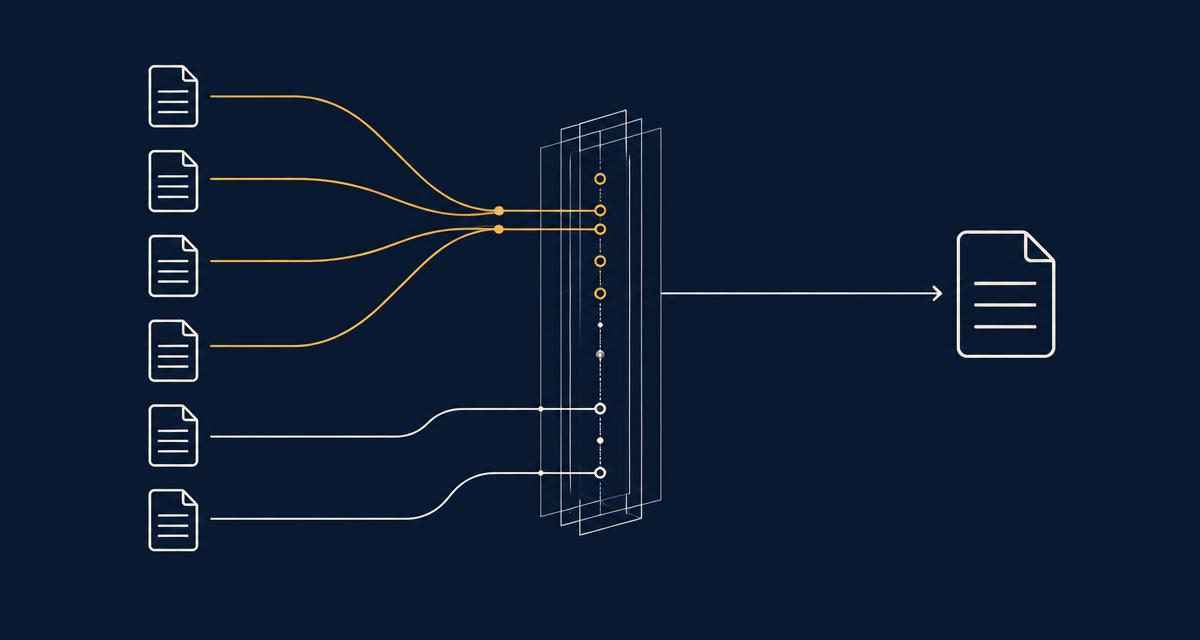
A claim may appear across several websites, specialist publications, research pages, watchdogs, newsletters or policy platforms. To a hurried analyst, that distribution can look like corroboration. To a retrieval system assembling an AI-generated answer, it can look like a broad information environment around the claim. Yet the number of visible domains is not necessarily the number of independent sources behind them.
Five URLs can represent five independent observations. They can also represent one underlying report republished five times, several outlets drawing from the same undisclosed origin, a syndicated content chain, a shared dataset, a common editorial operator, or a group of sites that cite one another without adding independent evidence.
Those possibilities are analytically different. Treating them as equivalent can create false confidence.
This article deliberately abstracts from any current political case. It examines the mechanism rather than attributing conduct to a particular state, organisation or campaign. Shared infrastructure, repeated language, overlapping ownership or common sourcing can have legitimate explanations. They become institutionally relevant when they affect the degree of independence that an analyst — or an AI system — appears to attribute to the evidence.
For foreign ministries, the practical question is therefore not simply whether a source is credible. It is whether the evidence is actually independent.
1. Observation: source plurality is not the same as evidentiary independence
Diplomatic analysis has always relied on corroboration. A report gains weight when independent evidence supports it; an assessment becomes more defensible when different sources, methods or vantage points converge.
The difficulty is that the open web presents information as pages, domains, accounts and documents. Independence exists at a different level: origin.
A newspaper story quoting a report, a newsletter summarising the newspaper story and a policy blog repeating the newsletter may look like three sources on a search-results page. Analytically, they may still represent one evidence chain.
The same problem can arise without any deception. Wire copy is syndicated. Press releases are republished. Think-tank findings are cited by media outlets. Corporate datasets appear in multiple analyses. Researchers use the same public database. Newsrooms belong to the same group. Content-management systems and external agencies are shared for ordinary operational reasons.
The error occurs when repetition is mistaken for independent confirmation.
This distinction is increasingly explicit in OSINT practice. The OWASP OSINT Verification Standard, released in 2026, defines an independent origin as one that does not derive the material assertion from the same underlying origin as another counted source. Its corroboration requirement warns against treating reposts, quotations, syndicated reports or model restatements as independent support.
For a foreign ministry, that principle can be stated simply:
The unit of corroboration should increasingly be the provenance chain, not the webpage.
This matters even before AI enters the workflow. But AI-mediated information systems make the distinction more consequential because they can compress multiple documents into one fluent synthesis while leaving parts of the underlying lineage difficult to see.
2. Mechanism: how one origin can become many visible sources
A simplified source-multiplication pathway can look like this:
common origin → multiple publications or domains → indexing and circulation → retrieval → apparent corroboration → human or AI synthesis
The common origin may be a primary document, interview, dataset, press release, commissioned report, editorial operation or earlier publication. Material can then move through different channels in several ways.
It may be republished, with minimal changes. It may be syndicated to several outlets. It may be summarised, making the derivative page appear more independent than it is. It may be cross-cited, with outlets referring to one another in a loop. Or several publications may rely on a shared underlying source without making that dependence obvious to the reader.
None of those patterns proves coordination or manipulation.
A common web host does not prove common editorial control. Similar wording does not establish a common author. Publication timing alone does not prove orchestration. Shared data does not invalidate multiple analyses built from it. Even common ownership does not mean that individual newsrooms or researchers lack editorial independence.
These are signals for further examination, not conclusions.
The analytical objective is narrower: determine whether the material assertions being counted as corroboration actually derive from independent origins.
That distinction matters because visible plurality can accumulate quickly. One original claim can be quoted by several outlets; those stories can be indexed separately; other pages can cite the secondary coverage; and an AI-enabled search system can later retrieve several of those documents for the same query.
The result is not necessarily false information. The problem is that the apparent breadth of support can become larger than the underlying breadth of evidence.
AI adds a provenance-compression layer
Search-enabled AI systems introduce another step.
When a user asks a question, an AI service may search or retrieve multiple documents and synthesise them into a single answer. The user may see several citations, a subset of the pages actually consulted, or no usable source trail at all, depending on the system and query.
A 2026 study in Data & Policy, based on roughly 14,000 real-world LMArena conversation logs, found substantial differences between search-enabled LLMs in how many pages they accessed and how many they ultimately cited. The authors describe an attribution gap between information consumed during search and the sources made visible to the user.
For diplomatic analysis, this creates a specific problem. Even where the citations shown are technically accurate, they may not reveal whether several retrieved documents trace back to the same underlying origin.
AI synthesis can therefore compress not only information, but also provenance relationships.
This should not be interpreted as evidence that AI systems systematically mistake repeated content for independent corroboration. Model and retrieval architectures differ, and their internal source-ranking processes are not fully observable. Research on so-called LLM grooming also cautions against assuming deliberate manipulation whenever unreliable material appears in an AI answer: a 2025 peer-reviewed study in the Harvard Kennedy School Misinformation Review found that some problematic references were better explained by gaps in credible information — data voids — than by demonstrated manipulation.
The methodological lesson is the same as in the earlier Hanover analysis: observation, mechanism and attribution must remain separate.
3. Institutional risk: when apparent corroboration becomes analytical confidence
The risk for a foreign ministry is not primarily that an analyst will encounter one weak website.
Professional analysts already know that unfamiliar sources require scrutiny.
The harder problem is when weak or dependent evidence arrives distributed across multiple apparently separate sources and begins to look like convergence.
RISK 01 — False corroboration
Suppose five publications repeat the same material claim.
If three are drawing from the same original report, one is quoting another, and only one contains genuinely independent evidence, the analyst does not have five corroborating sources.
The ministry may nevertheless experience the information environment as if it did.
That can affect confidence language, briefing emphasis, escalation decisions and the perceived strength of an emerging narrative.
The practical danger is therefore not merely misinformation. It is miscalibrated confidence.
RISK 02 — Provenance compression
Time pressure encourages analysts to move from discovery to synthesis quickly.
AI tools intensify that convenience. A generated answer can provide a concise account of several documents within seconds. But the analytical compression that makes AI useful can also remove exactly the relationships that matter for verification: who first made the claim, which sources are derivative, which pages rely on the same evidence and where the information changed as it circulated.
For high-consequence work, provenance cannot disappear simply because synthesis has become easier.
RISK 03 — Circular citation and recursive reinforcement
A further problem emerges when sources begin citing one another.
Source A introduces a claim. Source B cites A. Source C cites B. A later update to A cites C as apparent external confirmation. A search or retrieval system may now encounter several pages carrying mutually reinforcing references even though the chain began with one origin.
This is not always deliberate. Citation cascades can arise through normal reporting and research behaviour.
But once the original path becomes difficult to reconstruct, repetition can acquire the appearance of validation.
The risk becomes greater when AI-generated summaries themselves are quoted, reposted or used to produce new material. An automated restatement of existing information should not be counted as an independent source of that information.
RISK 04 — External representation and internal analysis can share the same source environment
This is where the problem becomes specifically important for diplomacy.
The same web environment can affect a ministry in two directions.
Externally, citizens, journalists, investors, officials and foreign audiences may ask AI systems about a state's policies, actions or disputes. The answers they receive can be influenced by whatever source environment is available and retrievable.
Internally, diplomats and analysts may use the same class of systems for discovery, summarisation, translation, comparison or horizon scanning.
A provenance weakness in the external information environment can therefore become an internal analytical weakness if generated synthesis is treated as evidence without reconstructing the underlying source family.
The problem is no longer confined to communications or reputation. It touches institutional judgment.
4. Mitigation: a Source Independence Check for foreign ministries
The answer is not to distrust every unfamiliar publication or launch a forensic investigation whenever several websites say the same thing.
Most diplomatic analysis would become impossible under that standard.
The better approach is proportional verification: increase provenance scrutiny when the consequence of error is high, the source pattern is unusual, the claim is material to a decision, or apparent corroboration meaningfully changes analytical confidence.
A simple Source Independence Check can help.
1. Origin — Where did the material claim begin?
Identify the earliest traceable source of the assertion where reasonably possible.
Is it based on a primary document, direct observation, interview, dataset or another publication? If several articles ultimately point back to the same document, they may provide useful interpretation without providing independent factual corroboration.
2. Evidence — Are the sources using independent evidence?
Two analysts can independently interpret the same dataset and still provide genuinely distinct analysis. But they should not be counted as two independent observations of the underlying event merely because their conclusions appear on different domains.
Separate independent interpretation from independent evidence.
3. Relationships — Do apparently separate sources share meaningful provenance?
Where the claim is consequential, examine relevant public indicators such as ownership, authorship, disclosed funding, syndication, common primary sourcing, citation relationships and editorial attribution.
Technical indicators — hosting, analytics identifiers, registration patterns, templates or infrastructure — can be useful signals where lawfully available, but they should not be treated as standalone proof of common control.
4. Citation — Is the corroboration circular?
Follow the references backwards.
Does Source C actually verify the claim, or does it cite Source B, which cites Source A? Has a later article transformed the existence of prior reporting into apparent confirmation of the underlying assertion?
A citation chain is not automatically an evidence chain.
5. Timing — Does the publication pattern require explanation?
A sudden cluster of highly similar material can justify closer examination, particularly during a crisis or contested information event.
But timing alone is weak evidence. Major news events naturally produce simultaneous coverage. The question is whether timing combines with other provenance indicators in a way that changes the independence assessment.
6. Independence — How many distinct provenance chains remain?
After clustering derivative or shared-origin material, restate the evidence base.
Instead of:
“Five sources corroborate the claim.”
an assessment might more accurately say:
“Five publications report the claim, but four trace to the same underlying source; one additional source appears independent.”
That sentence may materially change the confidence attached to the judgment.
When should a foreign ministry escalate the check?
A deeper provenance review is particularly justified when several conditions converge:
- the claim could affect a high-consequence diplomatic or security decision;
- several unfamiliar sources appear unusually quickly;
- authorship, ownership or original sourcing is difficult to establish;
- multiple pages use highly similar claims, evidence or errors;
- sources cite one another without a recoverable primary origin;
- AI-generated analysis presents apparent multi-source agreement that materially affects confidence;
- the information environment contains a known data void or severe shortage of credible primary information.
None of these conditions proves an influence operation.
They indicate that source independence has become decision-relevant.
5. What this changes for AI-assisted diplomatic analysis
Foreign ministries increasingly need a distinction between discovery tools and evidentiary sources.
AI assistants can be excellent discovery tools. They can locate documents, identify competing arguments, compare long texts, translate materials and widen an analyst's field of view.
But the generated synthesis should not itself increase the apparent independence of the evidence beneath it.
For consequential assessments, ministries should consider several operating rules.
First, an AI answer should not count as independent corroboration of the sources from which it was constructed.
Second, when an AI system presents phrases such as “multiple reports indicate” or “several sources suggest”, analysts should be able to inspect which sources are meant and whether those sources are actually independent.
Third, material claims should remain traceable through the analytical process. If an AI tool summarises a document, the original document — not merely the generated summary — should remain available for verification where the judgment depends on it.
Fourth, confidence should reflect provenance quality and source independence, not simply the number of retrieved documents.
Fifth, ministries should preserve the distinction between source reliability and claim credibility. A respected outlet can repeat a claim derived from someone else; an unfamiliar source can sometimes hold direct evidence. Institutional reputation is relevant, but it cannot replace examination of the specific evidence chain.
These principles are consistent with the broader retained-authority problem identified across Diplomats.Digital research: institutions need to retain the ability to reconstruct how an assessment was produced, what information it depended on and where human judgment entered the process.
6. Institutional design: provenance should connect analysis, communications and AI governance
The provenance problem does not belong to one department.
Public-diplomacy teams need to understand how national positions are represented across AI-mediated information environments. OSINT and policy analysts need to assess the independence of evidence. Information-integrity teams may investigate unusual source networks. Digital and AI-governance teams need controls for systems used internally. Crisis teams need these functions to work under time pressure.
The answer is not necessarily a new unit.
For many ministries, the more important requirement will be a shared escalation path.
When an analyst encounters a suspicious or unusually concentrated source pattern, who can help examine it? When an AI-generated briefing relies on unfamiliar domains, what level of verification is required? When a potentially coordinated source family begins shaping an external narrative, how are communications, policy and analytical teams connected without collapsing analysis into messaging?
These are governance questions before they are technology questions.
The Diplomats.Digital Narrative Resilience Framework already treats narrative pressure as a cycle of sensing, evidence, interpretation, coordination, response and learning. Source independence adds a further discipline to that cycle: before apparent convergence changes institutional judgment, establish whether the convergence is real.
7. Strategic lesson: count provenance chains, not URLs
The open information environment has always contained repetition, syndication, coordinated messaging and uncertain attribution.
Generative AI did not create those phenomena.
What it changes is the speed and form through which information can be discovered, multiplied and synthesised. A user may encounter one fluent answer assembled from several pages without seeing how those pages relate to one another. A diplomat may receive a concise multi-source synthesis before having inspected any of the underlying evidence. A claim can therefore acquire apparent breadth faster than its provenance can be reconstructed.
That does not justify a default assumption of manipulation.
It justifies better analytical discipline.
Foreign ministries should avoid two symmetrical errors: assuming that repeated material is independent because it appears on several domains, and assuming that common patterns prove coordination when ordinary explanations remain plausible.
The task is to preserve the distinction between visibility, repetition, corroboration and attribution.
The Hanover case showed why foreign ministries need to understand the source environments from which machines assemble answers. The next step is to recognise that those environments can contain multiple visible sources without equivalent independence beneath them.
Narrative resilience therefore requires more than knowing what claims are circulating. It increasingly requires knowing how many genuinely independent evidence chains support them.
In an AI-mediated information environment, source diversity cannot be inferred from domain diversity.
For diplomatic analysis, the practical rule is even simpler:
Count provenance chains, not URLs.
Evidence Base & Further Reading
A. External standards and research
| Type | Source | Relevance |
|---|---|---|
| Standard | OWASP — OSINT Verification Standard (OOVS) v0.1.0, 2026. | Defines independent origin and requires corroboration to be assessed by distinct origins rather than repeated mentions, reposts or model restatements. |
| Research | Ilan Strauss, Jangho Yang, Tim O’Reilly, Sruly Rosenblat and Isobel Moure, Data & Policy, 2026 — “The attribution crisis in LLM search results: Estimating ecosystem exploitation.” | Examines gaps between web pages consumed by search-enabled LLMs and the sources ultimately cited to users. |
| Research | Carl Miller, Hannah Perry and Flynn Devine, Demos, 2026 — “GEO for Geopolitics: What happens when AI and information warfare collide.” | Examines manipulation of retrievable information environments, RAG poisoning and implications for epistemic security. |
| Research | Maxim Alyukov, Mykola Makhortykh, Alexandr Voronovici and Maryna Sydorova, HKS Misinformation Review, 2025 — “LLMs grooming or data voids?” | Provides an empirical counterpoint showing why problematic retrieval should not automatically be attributed to deliberate manipulation and highlights the role of data voids. |
| Research | Luigi Di Martino and Heather Ford, Place Branding and Public Diplomacy, 2024 — “Navigating uncertainty: public diplomacy vs. AI.” | Explains how generative systems can smooth uncertainty into authoritative-looking synthesis, a particularly important issue for diplomatic interpretation. |
B. Related Diplomats.Digital analysis
| Type | Source | Relevance |
|---|---|---|
| Related DD analysis | Diplomats.Digital — “AI, Public Diplomacy and the Hanover Institute: What Foreign Ministries Should Learn.” | The companion analysis establishing the machine-mediated provenance problem through the Hanover Institute case. |
| Related DD framework | Diplomats.Digital — Narrative Resilience Framework. | Provides the wider institutional cycle for sensing, evidence, interpretation, coordination, response and learning. |
| Related DD analysis | Diplomats.Digital — “AI, Platforms, and Retained Authority.” | Connects AI-assisted work to traceability, dependencies and retained institutional authority. |
Online sources last reviewed 3 October 2026. This article intentionally abstracts from current political cases. It describes source-provenance mechanisms and institutional safeguards without attributing the conduct discussed to any particular state, organisation or campaign.
For private briefings or institutional inquiries, contact Diplomats.Digital.